A Practical Guide to Anti-Inflammatory Eating in Northern New England
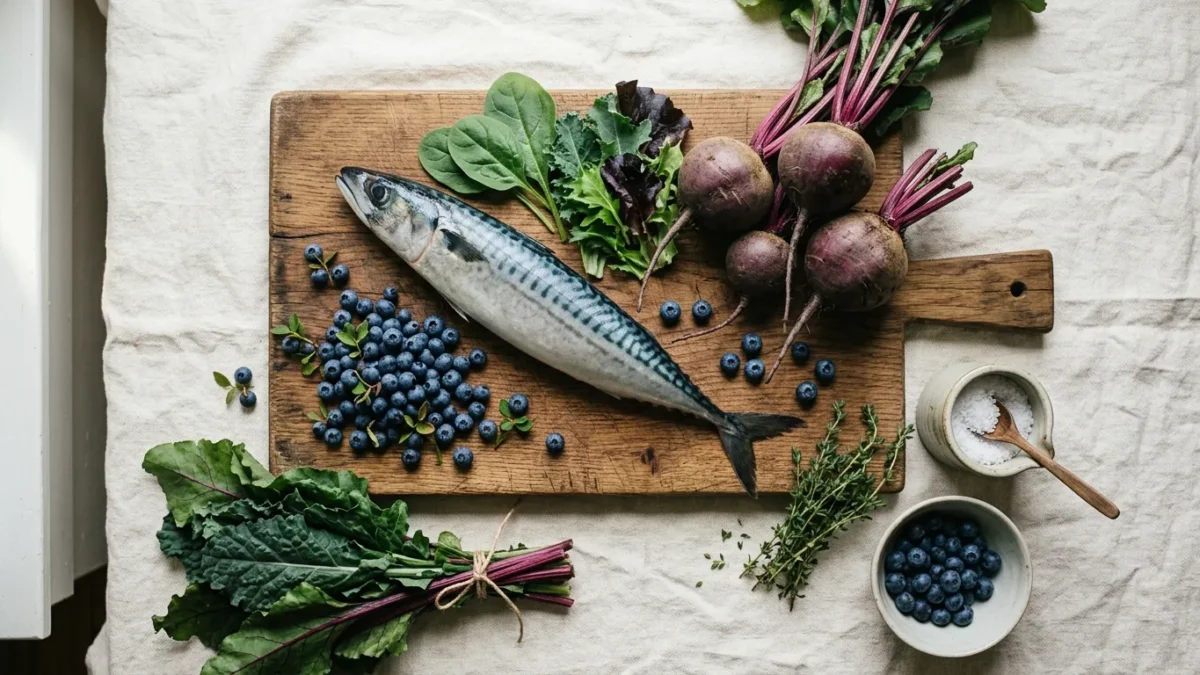
Northern New England is not the Mediterranean, but the principles of anti-inflammatory eating translate well to a Maine or New Hampshire kitchen. Wild blueberries from the Downeast barrens, cold-water fish from the Gulf of Maine, root vegetables that keep through a long winter — the region already produces many of the foods researchers point to most often. The challenge is knowing what to prioritize and why.
What Anti-Inflammatory Eating Actually Means
The term gets thrown around loosely. In research terms, anti-inflammatory eating means choosing foods associated with lower levels of markers like C-reactive protein (CRP) and interleukin-6, while limiting those associated with raising them. Studies consistently point toward whole foods rich in omega-3 fatty acids, polyphenols, and fiber.
It’s less about individual superfoods and more about the overall pattern over weeks and months. The Mediterranean diet is the most studied model, but several other dietary patterns show similar effects. What they share: high vegetable and fruit intake, quality fats, minimally processed grains, and fish.
Harvard Health has a useful summary of the core foods involved, and the underlying research is consistent enough that most registered dietitians now treat this approach as standard preventive nutrition rather than a niche intervention.
What Northern New England Already Has
Maine wild blueberries rank among the highest-antioxidant fruits available anywhere in the country. Research from the USDA Human Nutrition Research Center on Aging (Tufts University, Boston) and the University of Maine found that wild blueberries have roughly twice the antioxidant content of cultivated blueberries, measured by oxygen radical absorbance capacity. They freeze well and hold nutritional value through a long winter — which matters when fresh local produce disappears in October.
Cold-water fish from the Gulf of Maine deserve more attention than they get. Mackerel, herring, and sardines deliver omega-3 fatty acids at a fraction of the cost of salmon. If you supplement rather than eat fish regularly, it’s worth knowing what to look for: a guide to reading fish oil supplement labels can help you avoid products with poor EPA/DHA ratios or oxidation issues. These species are among the same ones that appeared in traditional coastal Maine diets for generations, before processed foods displaced them. They’re also among the lowest-mercury options available, which makes them practical for regular consumption.
Root vegetables — beets, sweet potatoes, carrots, parsnips — provide soluble fiber and carotenoids. Both show up in studies on inflammatory markers. They’re grown across Maine and New Hampshire, available at farm stands well into November, and store easily at home.
Fermented foods round out the picture. Sauerkraut, plain yogurt, and kefir support gut microbial diversity, and gut health has a measurable relationship with systemic inflammation. Research published in Cell in 2021 (Wastyk et al.) found that a high-fermented-food diet increased microbiome diversity and reduced several inflammatory markers compared to a high-fiber diet alone. Many Maine farms and small-batch producers now make sauerkraut locally, which means you don’t need to import it.
What to Cut Back On
Refined seed oils, added sugars, and ultra-processed foods consistently correlate with elevated inflammatory markers in large population studies. This doesn’t mean perfection is required or that occasional exceptions undo the baseline. It means the everyday pattern carries more weight than any single meal.
Refined carbohydrates are worth noting separately. White bread, sweetened beverages, and packaged snack foods cause rapid blood glucose spikes that trigger short-term inflammatory responses. Over years, that pattern accumulates. Swapping refined grains for whole oats, barley, or whole wheat — all grown in New England — reduces that load without eliminating carbohydrates entirely.
Alcohol is a separate question. Light-to-moderate consumption shows mixed results in the research, and current guidance from the U.S. Dietary Guidelines Advisory Committee has moved toward recommending lower amounts than in prior decades. Heavy or frequent drinking consistently raises inflammatory markers. That part of the evidence is clear.
A Seasonal Approach That Works Here
One practical advantage of eating in Maine or New Hampshire is that the seasons impose some structure. Summer and fall bring the highest variety: wild blueberries peak in July and August in Downeast Maine, local fish is fresh, and farm stands overflow with greens, squash, and root vegetables. The Portland farmers markets are a practical place to stock up on these anti-inflammatory staples during the growing season. Winter eating naturally shifts toward stored roots, frozen berries, canned or smoked fish, fermented foods, and legumes.
That shift isn’t a nutritional problem. Frozen wild blueberries retain their antioxidant content well. Canned sardines and mackerel are as nutritionally useful as fresh. Dried lentils and beans are among the most affordable sources of fiber and plant protein available anywhere.
The goal is continuity, not perfection in any given season.
What the Research Doesn’t Say
A few things worth stating plainly. Anti-inflammatory eating is not a treatment for any specific disease. It won’t reverse an autoimmune condition or eliminate chronic pain on its own. What the evidence supports is that dietary patterns influence background inflammation over time, and lower background inflammation is associated with better long-term health outcomes across a range of conditions.
Individual responses vary. Someone with celiac disease, inflammatory bowel disease, or a specific food sensitivity may need to modify standard recommendations. Working with a registered dietitian who understands your full health picture is worth the effort if you have a diagnosed condition.
Sources
- Harvard Health Publishing. “Foods that fight inflammation.” Harvard Medical School. https://www.health.harvard.edu/staying-healthy/foods-that-fight-inflammation
- Harvard Health Publishing. “Quick-start guide to an anti-inflammation diet.” Harvard Medical School. https://www.health.harvard.edu/diet-and-nutrition/quick-start-guide-to-an-antiinflammation-diet
- University of Maine Cooperative Extension. “Wild Blueberry Concentrations: Antioxidants, Vitamins and Minerals.” https://extension.umaine.edu/blueberries/resources/quality-food-safety/wild-blueberry-concentrations-antioxidants-vitamins-and-minerals/
- University of Maine. “Maine’s wild blueberries deliver more than tradition. Research proves they support health.” UMaine News. March 2026. https://umaine.edu/news/2026/03/maines-wild-blueberries-deliver-more-than-tradition-research-proves-they-support-health/
- Wastyk HC, Fragiadakis GK, Perelman D, et al. “Gut-microbiota-targeted diets modulate human immune status.” Cell. 2021;184(16):4137-4153. https://doi.org/10.1016/j.cell.2021.06.019
- U.S. Department of Agriculture and U.S. Department of Health and Human Services. Dietary Guidelines for Americans, 2020-2025. 9th Edition. December 2020. https://www.dietaryguidelines.gov
This article is for informational purposes only and does not constitute medical advice. Consult a qualified healthcare provider before making any health decisions.