Mount Washington for Regular People: Training and Safety
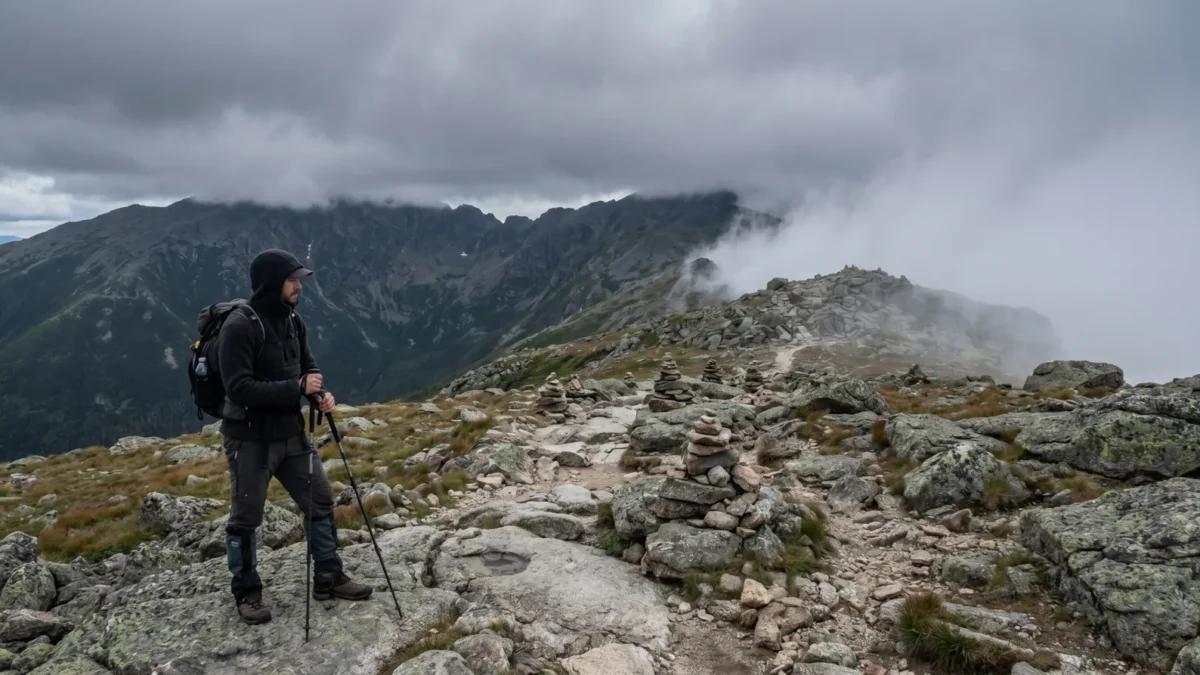
Plenty of people drive past Pinkham Notch every summer, look up at the bald gray hump of Mount Washington, and figure they could walk to the top in an afternoon. Some of them can. The trouble is the mountain doesn’t care how the morning started. It can be 70 and sunny at the parking lot and snowing sideways at the summit by the time you get there.
It’s the weather, not the height
Mount Washington tops out at 6,288 feet, the highest peak in the Northeastern United States, anchoring the Presidential Range of New Hampshire’s White Mountains. By western standards that’s not a giant. What makes it serious is the air that moves across it.
On April 12, 1934, the summit observatory clocked a wind gust of 231 miles per hour, the fastest ever recorded at a staffed weather station and the world record until 1996. The mountains to the west funnel and speed up westerly winds, and the summit sits where several major storm tracks cross. The Mount Washington Observatory expects hurricane-force gusts (74 mph or more) on roughly 110 days a year. The summit can post winter-like conditions in any month. In February 2023 it hit 47 below with gusts to 127 mph, a wind chill of 108 below zero, a national record.
That’s the part beginners miss. The danger isn’t a vertical scramble. It’s exposure.
What the hike actually asks of you
The classic non-technical route is the Tuckerman Ravine Trail, starting from the Appalachian Mountain Club’s Pinkham Notch Visitor Center. It climbs more than 4,000 feet over about 4 miles to the summit. Round trip, most people are out there 7 to 8 hours, longer if the footing is bad or the legs give out.
Read that again. Four thousand-plus feet of gain. This is a long, steep, all-day effort on rough rock, not a nature walk with a view at the end. The descent is its own test, because tired knees on wet granite are how a lot of bad afternoons start.
Building a base before you go
You don’t need to be an athlete. You do need a body that handles sustained effort. The CDC’s general guidance for adults is at least 150 minutes a week of moderate aerobic activity (or 75 minutes of vigorous activity) plus muscle-strengthening work on two or more days. That’s a reasonable floor to aim for in the weeks ahead of a climb like this.
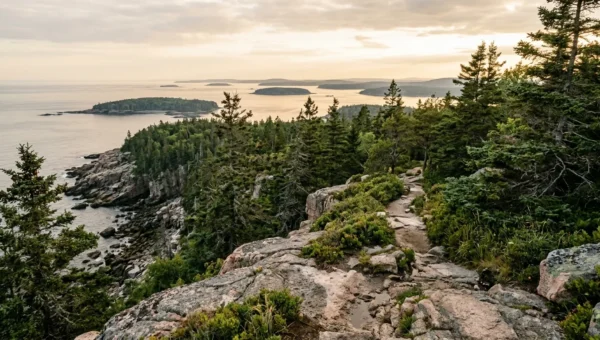
Hills beat flat ground for this kind of training. If you’ve got a smaller summit nearby, use it. Same goes for stairs, loaded packs, and long walks that leave your legs honestly tired. The point is to teach your body what hours of climbing feel like before the day it counts. Two good practice runs are the Beehive Trail in Acadia and the trail loops in the Camden Hills, both closer to home for most Mainers and both good gauges of where your fitness actually is.
Dressing for a mountain that freezes year-round
Cotton is the wrong call. Layers are the right one. The Appalachian Mountain Club’s advice is to dress in layers and pack extra dry layers to change into, because damp clothing pulls heat out of you fast.
This matters more than people expect, because hypothermia isn’t only a deep-cold problem. The CDC notes it can set in even above 40 degrees if you get chilled by rain or sweat. The early warning signs are easy to wave off: shivering, clumsy hands, confusion, slurred speech, drowsiness. Staying dry is half the battle. Bring rain and wind protection even on a bluebird morning, because the summit writes its own forecast.
The rule that keeps people alive: turn around
The smartest hikers on this mountain are the ones willing to quit. The Hiker Responsibility Code, known as hikeSafe and developed by the White Mountain National Forest and New Hampshire Fish and Game, makes “turn back” one of its six core points. The AMC puts it plainly: it’s always okay to turn back, stay off the summits on summer afternoons when clouds build to the west, and head for lower, forested ground when conditions sour.
Set a turnaround time before you leave the trailhead and honor it even if the summit is right there. New Hampshire Fish and Game runs around 180 search-and-rescue missions a year (183 in 2024), and a lot of those calls come from hikers caught out by weather that moved faster than they did. The state also sells a voluntary Hike Safe card that can spare holders from rescue-cost repayment in most situations.
Tell someone, carry the basics
Two habits do more than any single piece of gear. Leave your plan with someone (your route and when you expect to be back) and carry the essentials. The hikeSafe code’s gear list is a good check before you lock the car: map, compass, warm clothing, extra food and water, a headlamp, a first-aid kit, fire starter, a whistle, and rain and wind protection.
Mount Washington is a genuinely great climb, and regular people summit it safely all the time. They’re the ones who trained for the distance, packed for weather they hoped not to see, and treated turning back as a decision instead of a defeat.
Sources
- Encyclopaedia Britannica. Mount Washington | Highest Peak, Presidential Range, New England, & Map. Encyclopaedia Britannica. 2025. https://www.britannica.com/place/Mount-Washington
- Mount Washington Observatory. A Look at The Big Wind and Measuring Extreme Winds At Mount Washington. Mount Washington Observatory. 2024. https://mountwashington.org/a-look-at-the-big-wind-and-measuring-extreme-winds-at-mount-washington/
- CBS News Boston. Mount Washington sets national windchill record of 108 degrees below zero. CBS News Boston. 2023. https://www.cbsnews.com/boston/news/mount-washington-sets-national-windchill-record-of-108-degrees-below-zero/
- Mount Washington Observatory. Top Trails for Hiking Mount Washington According to White Mountain Hiking Legends. Mount Washington Observatory. 2024. https://mountwashington.org/top-trails-for-hiking-mount-washington-according-to-white-mountain-hiking-legends/
- Centers for Disease Control and Prevention. Adult Activity: An Overview | Physical Activity Basics. CDC. 2023. https://www.cdc.gov/physical-activity-basics/guidelines/adults.html
- Centers for Disease Control and Prevention. Preventing Hypothermia | Winter Weather. CDC. 2024. https://www.cdc.gov/winter-weather/prevention/index.html
- Appalachian Mountain Club. Managing Extreme Mountain Weather. Appalachian Mountain Club. 2024. https://www.outdoors.org/resources/amc-outdoors/outdoor-resources/managing-extreme-mountain-weather/
- hikeSafe (White Mountain National Forest & NH Fish and Game). Hiker Responsibility Code. hikeSafe. 2025. https://www.hikesafe.com/the-code
- State of New Hampshire Fish and Game. Hiking Safety. State of New Hampshire Fish and Game. 2025. https://www.wildlife.nh.gov/get-outside/hiking-safety
- New Hampshire Bulletin. With costs mounting for Fish and Game, Hike Safe cards viewed as big part of the solution. New Hampshire Bulletin. 2024. https://newhampshirebulletin.com/2024/09/25/with-costs-mounting-for-fish-and-game-hike-safe-cards-viewed-as-big-part-of-the-solution/
This article is for informational purposes only and does not constitute medical advice. Consult a qualified healthcare provider before making any health decisions.