Portland Farmers Markets: A Seasonal Nutrition Guide
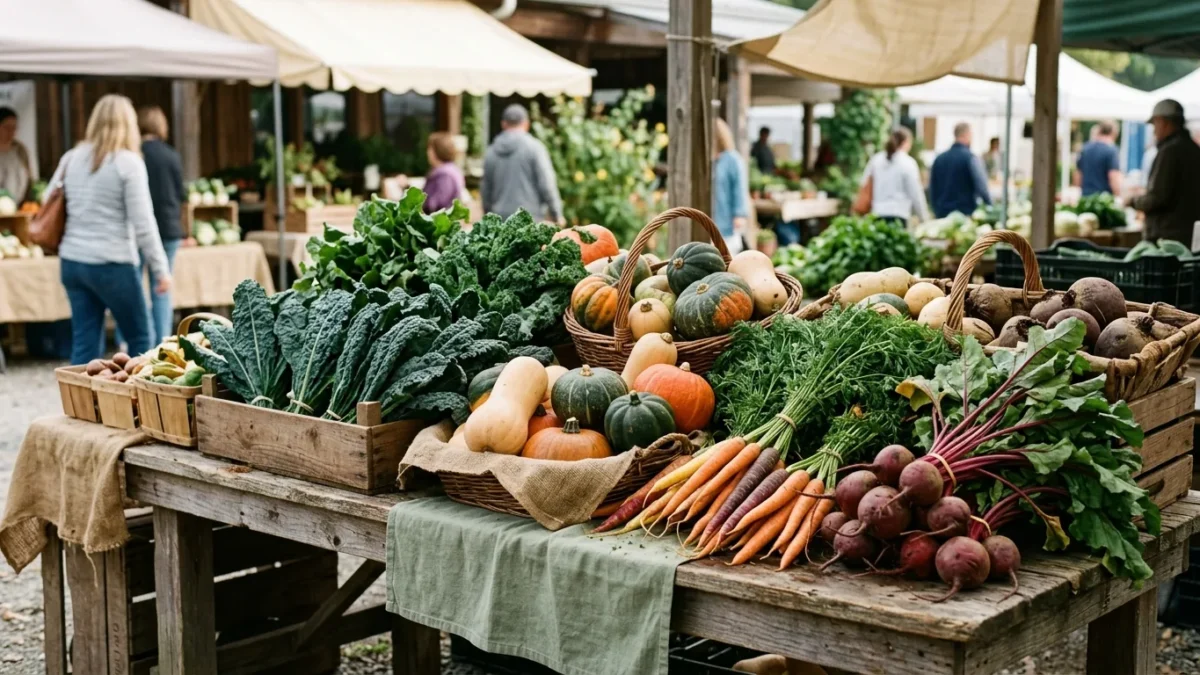
Portland’s farmers markets run from late April through November, with the Monument Square market staying open year-round on Wednesday mornings. If you’re trying to eat more whole foods, the seasonal rotation at these markets gives you a natural structure. You don’t have to build a diet plan. The produce does it for you.
Spring: May Through June
The early stalls are spare but nutritionally strong. Asparagus shows up first, followed by salad greens, radishes, spring onions, and rhubarb. These crops are high in folate and vitamin K, and early-season greens tend to be particularly rich in nitrates, which the body converts to nitric oxide. Research published by the American Heart Association has linked dietary nitrates to modest improvements in blood pressure.
Rhubarb is worth mentioning on its own. It’s high in polyphenols and fiber, and it pairs well with the strawberries that arrive in June. You’ll also find locally produced maple syrup at many spring stalls. It’s not a health food exactly, but it’s a minimally processed sweetener with small amounts of zinc and manganese, which refined sugar doesn’t have.
Buy greens frequently. They wilt fast. Plan for two or three market trips in May and June if you can swing it. If you find your energy or immunity flagging during the transition, mud season takes a real toll on Maine immune systems and the reasons are worth understanding.
Summer: July Through August
This is the peak window. The variety gets wide fast: tomatoes, cucumbers, summer squash, corn, green beans, fresh herbs, and blueberries. Stone fruits sometimes show up from southern New England vendors, though that depends on the season and the grower.
Wild Maine blueberries are the nutritional standout of the summer market. They’re smaller and more intensely flavored than cultivated varieties, and they have a higher concentration of anthocyanins, the compounds that give them their deep color. A 2020 review in Advances in Nutrition found that anthocyanin-rich foods are associated with reduced markers of oxidative stress. Maine’s wild blueberry season runs roughly mid-July through late August.
Fresh herbs are easy to overlook at the market. Basil, cilantro, and dill cost almost nothing, and they carry their own phytochemicals alongside the flavor. Freeze what you won’t use in two weeks.
Summer is also the best time to build meals primarily around raw vegetables and fresh fruit. Imported produce can’t compete with what’s ripe 30 miles away.
Fall: September Through November
The market shifts from color to substance. Root vegetables take over: beets, carrots, turnips, parsnips, and sweet potatoes. Winter squash arrives in September and keeps coming through November. Butternut, acorn, and delicata are all high in beta-carotene, and they store well. A butternut you buy at the Deering Oaks market in October can sit on your counter until January.
Maine apple orchards are usually well represented by mid-September. Apples contain quercetin, a flavonoid that laboratory studies have associated with anti-inflammatory activity, according to research published in the journal Nutrients. That said, the concentrations vary by variety, and the practical effect of eating an apple depends heavily on the rest of your diet. For a broader look at how food choices in this region affect inflammation, this guide to anti-inflammatory eating in northern New England is worth reading alongside what’s available at the market.
Late-season kale and chard are worth grabbing. They tolerate frost, and cold actually converts some of the plant’s starches to sugar. Frost-kissed kale from a Maine farm tastes noticeably different from what arrives in a bag from California.
If you want to extend your seasonal eating beyond the market stalls, fall is also when Maine’s wild edibles peak. Wild mushrooms and late-season berries found across Maine have distinct nutritional profiles that complement what you’ll find at the farmers market.
Winter: December Through March
The Wednesday winter market at Monument Square is a smaller operation, but it’s reliable. Expect stored root vegetables, greenhouse greens, eggs, preserved goods, and meat from local farms. The variety is limited, but the quality is consistent.
If you froze summer blueberries or blanched and froze green beans in August, this is when that effort pays off. Freezing at peak ripeness preserves most of the nutritional value. Research from the University of California, Davis found that frozen fruits and vegetables are nutritionally comparable to fresh, and in some cases superior to produce that’s been stored and shipped over long distances.
Fermented foods from local producers, such as sauerkraut and traditional pickles, show up at winter markets and are worth picking up. Fermented vegetables contain live cultures and short-chain fatty acids that some research suggests may support gut health, though the field is still developing. The American Gut Project has produced some of the most detailed population-level data on this topic to date. If you want to understand what the current evidence actually supports, the basics of gut health research offer helpful context for evaluating these claims.
The winter market also has a social function that’s easy to underestimate. It keeps you connected to local food producers and the seasonal rhythm of where you live. That continuity matters, even in February.
Sources
- Portland Food Co-op. Seasonal Produce Calendar for Maine. 2025.
- USDA Agricultural Research Service. Nutritional Data for Fruits and Vegetables. Updated 2024.
- American Heart Association. Dietary Nitrates and Blood Pressure. (Cited in multiple AHA journal publications.)
- Wallace TC, et al. “Anthocyanins.” Advances in Nutrition. 2020.
- Cermak NM, et al. Research on quercetin and anti-inflammatory activity. Nutrients. (Various years.)
- Bouzari A, et al. “Mineral, Fiber, and Total Phenolic Retention in Eight Fruits and Vegetables.” Journal of Food Science. 2015. (University of California, Davis research.)
- American Gut Project. humanfoodproject.com. (Population-level gut microbiome data.)
This article is for informational purposes only and does not constitute medical advice. Consult a qualified healthcare provider before making any health decisions.