How Accurate Is Lyme Testing? Two-Tier Tests Explained
Maine logged a record 3,218 Lyme disease cases in 2024, breaking the prior record of 2,943 set just a year earlier. With ticks that busy, a lot of people end up in a doctor’s office asking for a Lyme test. Here’s the part that surprises most of them: a negative result early on doesn’t always mean you’re clear.
How two-tier Lyme testing actually works
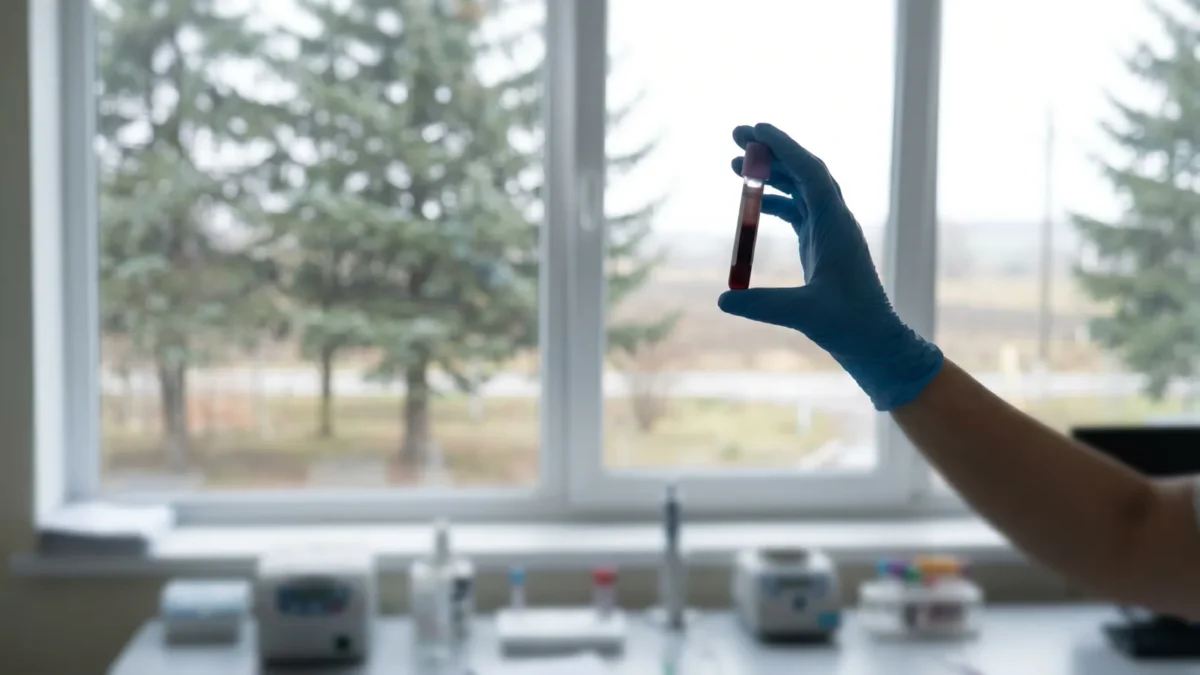
The standard Lyme blood test runs in two steps. According to the CDC, standard two-tier testing starts with an enzyme immunoassay (EIA) as the first screen. If that comes back positive or equivocal, a second confirmatory test follows, traditionally a western blot. If the first step is negative, no further testing is recommended.
One thing worth knowing about these tests. They don’t look for the bacteria. They look for antibodies your immune system makes in response to the bacteria. That distinction is the whole ballgame.
The early-window problem
Antibodies take time to show up. The CDC notes that serologic assays can be falsely negative during the first four to six weeks after infection, because the antibodies the test depends on simply haven’t developed yet. A 2019 Cleveland Clinic Journal of Medicine review puts numbers on it: the IgM response forms in one to two weeks, followed by the stronger IgG response at two to four weeks.
That same review found standard two-tier testing has a sensitivity of just 17 to 40 percent in early localized infection. For someone with a single bull’s-eye rash, sensitivity drops to about 14 percent. Test too soon and the result can miss a real infection more often than it catches one.
When a doctor skips the test
This is why guidelines tell clinicians not to lean on a blood test in the earliest stage. The 2020 IDSA, AAN, and ACR guideline recommends that when a patient in a Lyme-endemic area has the characteristic erythema migrans (bull’s-eye) rash, doctors diagnose and treat clinically rather than wait on serology. Most people with early rash are still seronegative. A negative test at that point would be misleading, not reassuring.
What changed in 2019, and what it means for Mainers
On July 29, 2019, the FDA cleared a modified two-tier approach that swaps the western blot second step for a second EIA. A 2024 Journal of Clinical Microbiology analysis found these modified algorithms improve sensitivity in early Lyme disease without giving up specificity.
For Mainers, a couple of practical takeaways. The blood test your doctor orders is not the same thing as sending the tick itself to a lab. The UMaine Cooperative Extension Tick Lab in Orono tests submitted ticks for the pathogens behind Lyme and other tickborne illnesses, which is a separate question from whether your own body has mounted a response. And timing matters. If you have a rash, the clinical picture often counts for more than the lab. For the bigger picture on prevention and what to do after a bite, see our complete Maine and New Hampshire tick guide, and if symptoms linger after treatment, our look at what the research shows on post-treatment Lyme.
Sources
- U.S. Centers for Disease Control and Prevention. Clinical Testing and Diagnosis for Lyme Disease. 2024. https://www.cdc.gov/lyme/hcp/diagnosis-testing/index.html
- John TM, Taege AJ. Appropriate laboratory testing in Lyme disease. Cleveland Clinic Journal of Medicine. 2019. https://www.ccjm.org/content/86/11/751
- Infectious Diseases Society of America. Clinical Practice Guidelines by IDSA, AAN, and ACR: 2020 Guidelines for the Prevention, Diagnosis and Treatment of Lyme Disease. 2020. https://www.idsociety.org/practice-guideline/lyme-disease/
- CDC / Morbidity and Mortality Weekly Report. Updated CDC Recommendation for Serologic Diagnosis of Lyme Disease. 2019. https://pmc.ncbi.nlm.nih.gov/articles/PMC6818702/
- Journal of Clinical Microbiology. Performance of two modified two-tier algorithms for the serologic diagnosis of Lyme disease. 2024. https://pmc.ncbi.nlm.nih.gov/articles/PMC11077974/
- Maine Center for Disease Control and Prevention (Maine Tracking Network). Tickborne Diseases (annual Lyme, anaplasmosis, and babesiosis case counts). 2025. https://data.mainepublichealth.gov/tracking/tickborne
- University of Maine Cooperative Extension. Tick Testing Frequently Asked Questions, Cooperative Extension: Tick Lab. 2025. https://ticktesting.umaine.edu/ticktestinfo.php
This article is for informational purposes only and does not constitute medical advice. Consult a qualified healthcare provider before making any health decisions.