Spring Maple Sugaring Tours and the Walking That Comes With It
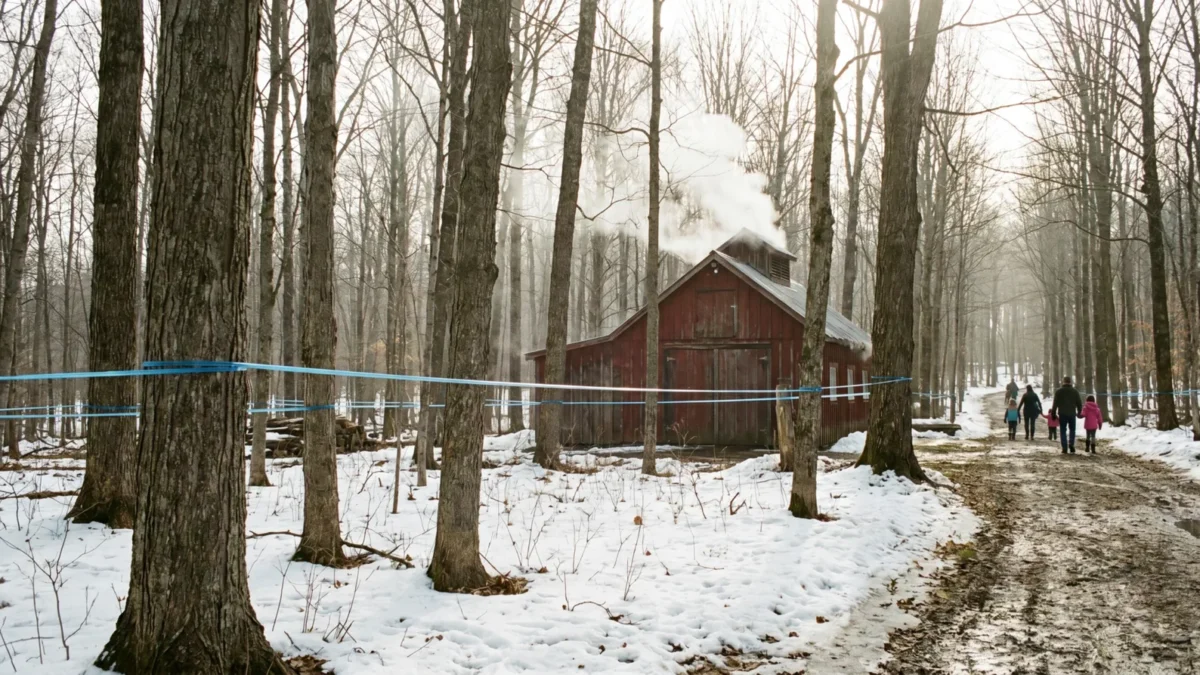
The fourth Sunday of March is the closest thing Maine has to a statewide spring ritual. Snow is still on the ground in a lot of places, mud season is starting where it isn’t, and a few hundred sugarhouses throw open their doors and put a pot of sap on the boil for anyone who wants to watch. In 2026 that lands on March 21 and 22, and it is worth more than the free taste at the end.
What Maple Sunday actually is
Maine Maple Sunday Weekend is the 43rd annual this year, falling on March 21 and 22. The Maine Maple Producers Association started the tradition back in 1983 and holds it on the fourth Sunday of March, with many producers also opening the Saturday before. The association posts a list of participating sugarhouses each year at MaineMapleProducers.com, so you can map a route before you go.
This is not a niche hobby. According to Governor Mills’ office, Maine has nearly two million taps, makes more than 575,000 gallons of syrup a year, and ranks fourth among U.S. states. The industry generates more than $56 million in economic activity and supports more than 800 jobs. The farm you visit is part of that.
New Hampshire runs its Maple Weekend on the very same dates, March 21 and 22. The NH Maple Producers Association keeps an online directory and the NH Maple Map, and the state’s tourism office says more than 90 sugarhouses open statewide for tastings, sugar-on-snow, wagon rides, and tours. So whichever side of the river you live on, there is a sugarhouse within a reasonable drive.
Why late March, and why it means walking
The timing is not arbitrary. Sap only runs when the nights are cold and the days warm up, that freeze-and-thaw rhythm that defines the end of a northern winter. UNH Cooperative Extension describes the conditions as nights in the 20s and days in the 40s, with producers expecting eight to ten good runs across a short season. Miss the window and the trees bud and the season is done.
Here is the part nobody puts on the flyer. A sugarhouse visit is rarely a stroll across a parking lot. Many sit at the end of a dirt road or a woods path, and the better tours walk you out into the sugarbush to see the tap lines among the trees. You end up doing a fair bit of moving on uneven, half-frozen ground without ever calling it exercise.
That counts. The CDC classifies brisk walking as moderate-intensity activity and advises adults to work up to at least 150 minutes of it a week, noting it can be split into smaller chunks. The agency also estimates that roughly 110,000 deaths a year in the U.S. could be prevented if adults 40 and older simply moved a little more, and that even an extra 10 minutes a day makes a difference. A morning of tramping a sugarbush trail is not wasted time.
The outdoor part matters too
Beyond the steps, there is something to the simple act of being outside in late winter. A 2019 study of nearly 20,000 people in England, published in Scientific Reports, found that those who spent at least 120 minutes a week in nature were noticeably more likely to report good health and high well-being than people who spent none. It did not matter whether the two hours came in one trip or several. A two-hour sugaring outing covers most of that threshold in a single Saturday.
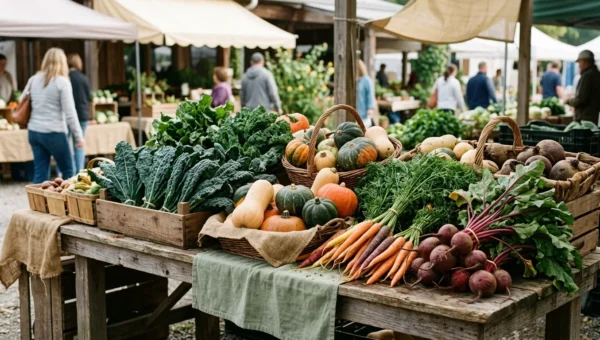
If you make a day of it, pair the sugarhouse with another local stop. Plenty of Maine farmers markets and their early-season vendors are worth folding into the same outing once the weather turns.
What you are actually buying at the end
The free sample is part of the fun, but the jug you take home is the point. Real maple syrup is concentrated sap and nothing else. It takes roughly 40 gallons of sap to make one gallon of syrup, boiled down using what UNH Extension calls the Jones Rule of 86. The federal standard of identity (21 CFR 168.140) defines maple syrup as the liquid food made by concentrating maple sap, at least 66 percent soluble solids derived solely from that sap. The pancake-aisle bottle, usually corn syrup or high-fructose corn syrup with maple flavoring, is a different product.
Since 2015, all pure maple syrup sold at U.S. retail is a single Grade A, split into four color-and-taste classes that run from golden and delicate through amber, then dark, then very dark and strong. Darker, later-season syrup tends to carry stronger antioxidant activity, per a 2023 peer-reviewed review, which also notes maple syrup supplies trace minerals refined sugar lacks, with manganese the standout. It is still added sugar, so use it the way you would any sweetener. But it is real food with a place you can drive to and a person who made it.
One last note for the procrastinators. A 2023 producer survey in Frontiers in Forests and Global Change found that most Northeast maple producers believe the tapping season is starting earlier each year. The window has always been short. There is no reason to assume it will wait for you.
Sources
- Office of Governor Janet T. Mills. Get Ready for Maine Maple Sunday Weekend, March 21 and 22. Maine.gov. 2026. https://www.maine.gov/governor/mills/news/radio_address/get-ready-maine-maple-sunday-weekend-march-21-22-2026-03-13
- Maine Maple Producers Association. Maine Maple Sunday Weekend. 2026. https://mainemapleproducers.com/
- Real Maine (Maine Dept. of Agriculture, Conservation and Forestry). 40 Sweet Years of Maine Maple Sunday. 2023. https://www.realmaine.com/agritourism/40-sweet-years-of-maine-maple-sunday/
- New Hampshire Maple Producers Association. 2026 New Hampshire Maple Weekend, Event Details. 2026. https://nhmapleproducers.com/event/new-hampshire-maple-weekend/
- VisitNH (State of New Hampshire, Division of Travel and Tourism). Maple Sugaring. 2026. https://www.visitnh.gov/plan-your-trip/spring/maple-sugaring
- University of New Hampshire Cooperative Extension. Maple Sugaring Tips for Beginners and Backyard Maple Sugar Producers. 2024. https://extension.unh.edu/resource/maple-sugaring-tips-beginners-and-backyard-maple-sugar-producers
- Food Science and Nutrition / PMC. Nutritional, pharmacological, and sensory properties of maple syrup: A comprehensive review. 2023. https://pmc.ncbi.nlm.nih.gov/articles/PMC10469071/
- U.S. Centers for Disease Control and Prevention. Benefits of Physical Activity, Physical Activity Basics. 2024. https://www.cdc.gov/physical-activity-basics/benefits/index.html
- White et al. / Scientific Reports (PMC mirror). Spending at least 120 minutes a week in nature is associated with good health and wellbeing. 2019. https://pmc.ncbi.nlm.nih.gov/articles/PMC6565732/
- U.S. Food and Drug Administration. CFR Title 21, 168.140 Maple sirup (standard of identity). 2024. https://www.accessdata.fda.gov/scripts/cdrh/cfdocs/cfcfr/CFRSearch.cfm?fr=168.140
- USDA Agricultural Marketing Service. Maple Syrup Grades and Standards. 2015. https://www.ams.usda.gov/grades-standards/maple-syrup-grades-standards
- Ahmed et al. / Frontiers in Forests and Global Change. Climate change and maple syrup: Producer observations, perceptions, knowledge, and adaptation strategies. 2023. https://www.frontiersin.org/journals/forests-and-global-change/articles/10.3389/ffgc.2023.1092218/full
This article is for informational purposes only and does not constitute medical advice. Consult a qualified healthcare provider before making any health decisions.