New Hampshire’s Best Swimming Holes for Post-Hike Recovery
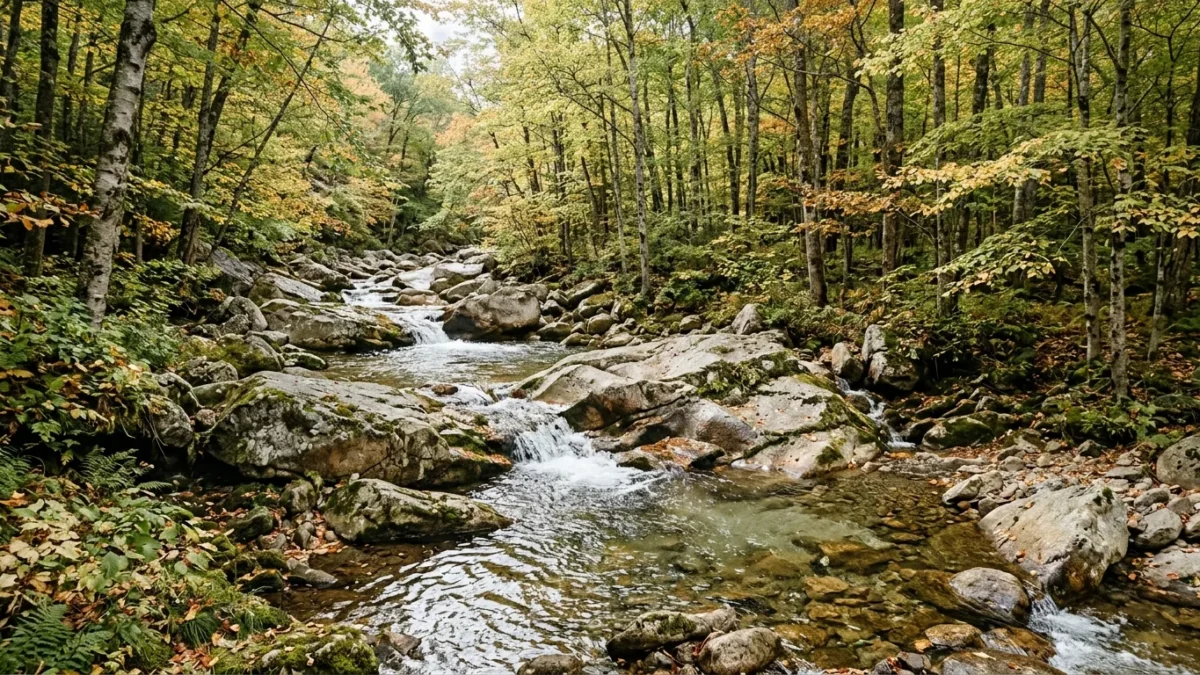
After a long ridge hike in the White Mountains, few things feel as good as wading into a cold mountain stream. New Hampshire has dozens of natural swimming holes fed by snowmelt and mountain springs. Water temperatures stay between 50 and 65 degrees Fahrenheit through much of the summer, and there’s a growing body of research suggesting that kind of cold soak does real work on tired muscles. If you prefer a more structured cold water practice, community cold plunge groups across New Hampshire offer a social version of the same experience year-round.
Five Swimming Holes Worth the Stop
Diana’s Baths in North Conway is the most accessible of the bunch. A series of cascading pools along Lucy Brook, it’s a short, flat walk from the parking area. The pools vary in depth and temperature, which makes it a good fit for families and solo hikers.
The Emerald Pool in the Pemigewasset Wilderness takes more effort to reach. You’ll hike in along the Lincoln Woods Trail, but the deep, clear pool at the base of a waterfall is a genuine reward. Lower Falls on the Kancamagus Highway is on the opposite end of the effort spectrum: roadside access to the Swift River, with large pools deep enough for full immersion. Jackson Falls in Jackson village has flat rocks for lounging and tends to draw a social crowd. Profile Falls in Bristol, fed by the Smith River, offers deeper pools with noticeably fewer people than the Kancamagus stops.
What Cold Water Does for Recovery
A 2022 meta-analysis published in Sports Medicine compared cold water immersion against other recovery methods after strenuous exercise. The review found that cold water immersion outperformed passive rest for reducing perceived muscle soreness, particularly after endurance exercise and when applied for short to medium durations.
The likely mechanism: cold water causes blood vessels to constrict, which reduces swelling in muscle tissue. When you warm up afterward, blood flow surges back, which may help clear metabolic byproducts from hard-worked muscles. Replacing the electrolytes lost during the hike itself also matters for recovery; a look at electrolyte powders ranked by sodium content and sugar load can help you choose what to drink on the drive home.
The mental side is harder to pin down, but it’s consistently reported. The cold shock, the natural setting, and the way your body feels afterward seem to combine into something that’s good for mood. Whether that’s endorphins, simple relief, or something else isn’t fully settled in the literature.
Safety Before You Jump In
Check current conditions before you swim. Heavy rainfall raises water levels and increases current speed quickly in mountain streams. Never dive headfirst into water you haven’t tested for depth. Hypothermia becomes a real concern in water below 50 degrees, even on a warm summer day. Keep immersion time short, get out before you start shivering hard, and warm up gradually. Summer heat on exposed ridgelines is a separate hazard worth understanding before you head out; the difference between heat exhaustion and heat stroke in NH summer conditions is something every hiker should know. And if you’re planning a technically demanding route, reading up on how to prepare your body for challenging New England hikes can help you arrive at the swimming hole in better shape.
Sources
- Ortiz RO Jr, et al. Effects of Cold-Water Immersion Compared with Other Recovery Modalities on Athletic Performance Following Acute Strenuous Exercise in Physically Active Participants. Sports Medicine. 2022. doi:10.1007/s40279-022-01800-1
- New Hampshire Division of Forests and Lands. Swimming and Recreation Safety. New Hampshire Department of Natural and Cultural Resources.
This article is for informational purposes only and does not constitute medical advice. Consult a qualified healthcare provider before making any health decisions.