Winter Trail Etiquette: Sharing Groomed Trails Safely
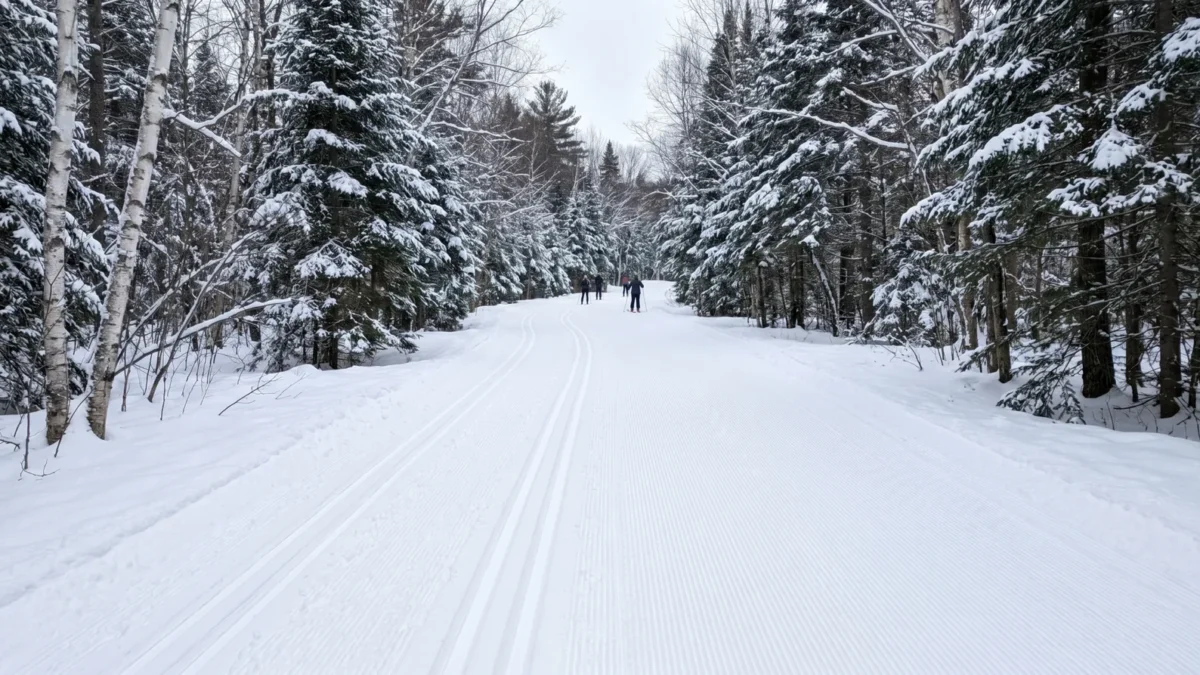
The first real snow of the season turns Acadia’s carriage roads into something like a shared road map. Skiers in the set tracks, snowshoers off to the side, the occasional dog, and lately a fat bike or two. It mostly works because people follow a handful of rules, some posted, most just understood. If you’re new to groomed trails, those rules can feel invisible until you break one and a skier gives you a look you won’t forget.
Why groomed trails have rules at all
A groomed trail is a built surface. Someone, often a volunteer, dragged equipment over fresh snow to pack it down and cut tracks into it. That work is fragile. A single set of postholes from a boot can wreck a stretch that took an hour to set. The etiquette exists to protect the surface and to keep fast-moving skiers from colliding with slow-moving everyone else.
Who yields to whom
The main rule is counterintuitive at first. On groomed cross-country trails, uphill skiers yield to downhill skiers. The U.S. National Park Service puts it plainly: it’s easier to stop while you’re going uphill, so the person climbing gives way to the person descending. Gravity does not negotiate, and a skier flying down a slope has the least control of anyone on the trail.
Snowshoers and walkers: stay out of the tracks
Those two parallel grooves in the snow are not a walking path. They’re set for classic cross-country skiing, and the NPS guidance is blunt about it. Snowshoers and skate skiers should use the groomed lane beside the track, and you should never walk on the groomed trails or tracks, even with microspikes or tall boots. If you want to know why it matters that much, picture the physics. Snowshoe Magazine notes that a skier coming downhill can catch an edge on a hole or frozen rut left by snowshoe crampons, then fall and get seriously hurt. On a busy trail, hiking single file beside the track keeps the surface intact and keeps you out of the line of fire.
Fat bikes, dogs, and the rest of the crowd
Fat bikes have become a regular sight on northern New England’s winter trails, and they come with their own code. The International Mountain Bicycling Association’s best practices set one cardinal rule: don’t leave ruts. A bike needs enough float to roll over the snow without leaving a rut deeper than an inch. If you’re carving a trench, IMBA’s advice is to turn around and try again on a different day or a different time of day, when the snow is firmer. That usually means very low tire pressure, often under 10 psi, paired with wide tires around 3.8 inches or wider to spread the rider’s weight. And freshly groomed snow is rarely ready to ride right away. It needs time to harden, or set up, before it can hold a bike.
Dogs are welcome on plenty of groomed multi-use trails, with conditions. Keep them leashed, keep them out of the set ski tracks, and pack out what they leave behind. Acadia goes further than custom here. Federal law requires that pets stay on a leash no longer than six feet inside the park.
The cold is the other trail user
Etiquette keeps the peace. The weather is what actually puts people in danger. Hypothermia does not wait for a blizzard. The U.S. Forest Service points out that it can set in even at cool, above-freezing temperatures, above 40 degrees Fahrenheit, when you get chilled by rain, sweat, or cold water. Staying dry matters as much as staying warm.
Know the warning signs. The CDC lists shivering, exhaustion, confusion, fumbling hands, memory loss, slurred speech, and drowsiness as signs of hypothermia, and a body temperature below 95 degrees Fahrenheit is a medical emergency. Frostbite is sneakier. It hits the extremities first, the nose, ears, cheeks, chin, fingers, and toes, and the early signs are white or grayish-yellow skin, skin that feels firm or waxy, and numbness. Because the frozen area goes numb, a person may not realize they have it until someone else points it out. Glance at your trail partner’s face now and then. They’ll do the same for you.
Where Mainers actually do this
The state has no shortage of places to practice all of the above. In Acadia National Park, volunteers with the Acadia Winter Trails Association set classic and skate ski tracks and groom sections of the roughly 45 miles of carriage roads, but only after new snow tops six inches and the roadbed is frozen. Inland, Carter’s XC Ski Center in Bethel runs about 55 km of groomed trails along the Androscoggin River, where snowshoers share the system with skiers. Pineland Farms in New Gloucester grooms about 30 km across its 5,000 acres for Nordic skiing and snowshoeing. If you’re building winter fitness on these trails, our guides to snowshoeing as a winter workout and cross-country skiing around Bethel are good next stops. Learn the surface, respect the people on it, and the trail will treat you well all season.
Sources
- U.S. National Park Service. Winter Trail Etiquette. 2024. https://www.nps.gov/articles/000/winter-trail-etiquette.htm
- Centers for Disease Control and Prevention. Preventing Hypothermia. 2024. https://www.cdc.gov/winter-weather/prevention/index.html
- Centers for Disease Control and Prevention. Preventing Frostbite. 2024. https://www.cdc.gov/winter-weather/prevention/preventing-frostbite.html
- U.S. Forest Service. Hypothermia. 2024. https://www.fs.usda.gov/visit/know-before-you-go/hypothermia
- U.S. National Park Service, Acadia National Park. Visiting in Winter. 2024. https://www.nps.gov/acad/planyourvisit/winter.htm
- Friends of Acadia. Acadia Winter Trails Association. 2024. https://friendsofacadia.org/our-impact/trails-carriage-roads/exploring-trails-carriage-roads/winter-recreation/acadia-winter-trails-association/
- IMBA Canada. Fat Bike Best Practices. 2023. https://imbacanada.com/fat-bike-best-practices/
- Falls Area Singletrack (FAST). Fat Bike Etiquette: Tips for a Respectful Groomed Trail Experience. 2022. https://www.fallsareasingletrack.org/news/fat-bike-etiquette-101-tips-for-an-enjoyable-and-respectful-groomed-trail-experience
- Snowshoe Magazine. Winter Trail Etiquette for Snowshoeing and Hiking. 2023. https://www.snowshoemag.com/trail-etiquette-for-snowshoeing-and-winter-hiking/
- Maine Office of Tourism. Cross Country Skiing & Snowshoeing in ME. 2024. https://www.visit-maine.com/state/cross-country-skiing-snowshoeing/
- Carter’s XC Ski Center. Carter’s XC Ski Center. 2024. https://www.cartersxcski.com/
This article is for informational purposes only and does not constitute medical advice. Consult a qualified healthcare provider before making any health decisions.