Spring Allergy Season in the Granite State: What Tree Pollen Data Shows
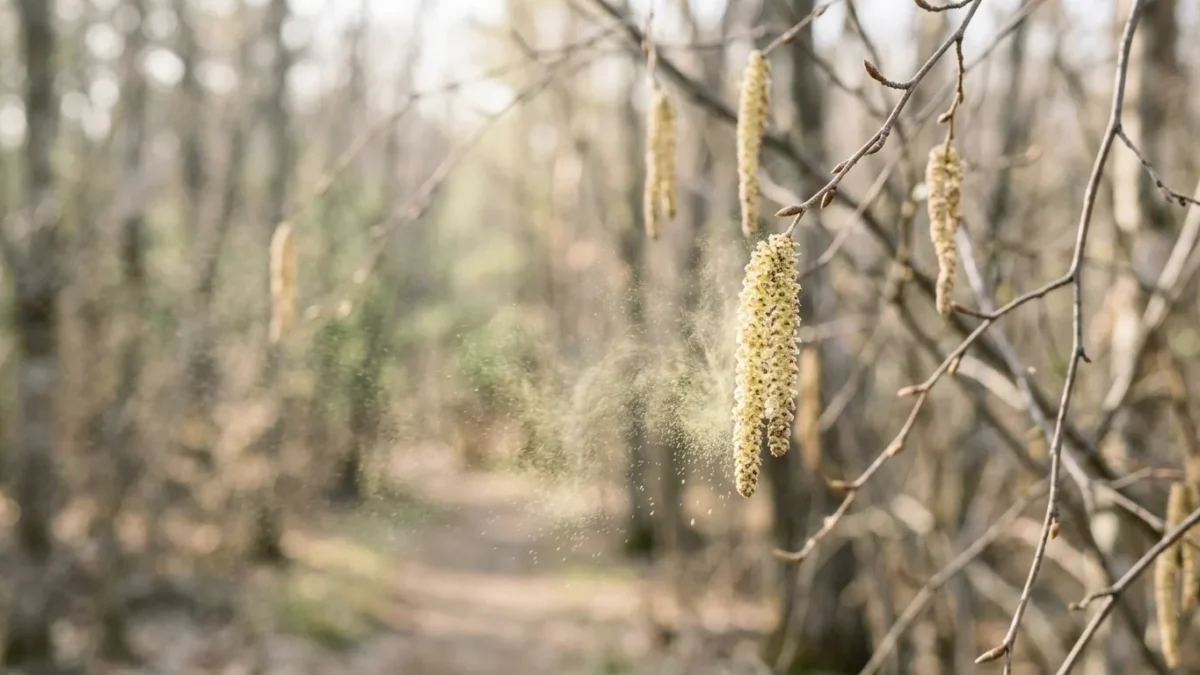
For allergy sufferers across New Hampshire and southern Maine, spring isn’t just mud season. It’s tree pollen season. Birch, oak, maple, and ash trees release pollen from late March through June, and that window has been shifting earlier and stretching longer, according to data from regional pollen monitoring stations.
What the Pollen Data Shows
Pollen monitoring stations in Concord and Manchester have documented that birch pollen season now begins about 10 days earlier than it did in 2010. Oak pollen, which typically follows birch by two to three weeks, has shown a similar shift. The total pollen load per season has also increased. That’s consistent with rising atmospheric CO2 levels, which stimulate pollen production in many tree species, according to a 2019 study published in PLOS ONE.
For residents of the Lakes Region and the Merrimack Valley, the overlap of birch and oak seasons creates an especially intense stretch in late April and early May. Two pollen sources peak at roughly the same time, and the effect compounds. It’s also worth noting that this stretch coincides with the tail end of mud season, when immune systems in the region are already dealing with the seasonal cold pressure that hits Maine hard.
Why Timing Matters for Symptoms
Most people start treating allergies after symptoms appear. Research suggests that’s the harder way to manage them. Starting an over-the-counter antihistamine or nasal spray before your peak pollen window, rather than once you’re already congested, tends to reduce overall symptom severity. A few practical habits also make a real difference: keeping windows closed during morning hours when pollen counts are typically highest, showering after spending time outdoors, and running a HEPA air filter in the bedroom. If you’re not sure whether your indoor air quality is actually improving, home air quality monitors can tell you what a filter alone cannot.
The American Academy of Allergy, Asthma and Immunology recommends nasal corticosteroid sprays as a first-line option for seasonal nasal symptoms, based on evidence that they reduce inflammation in the nasal passages. Talk with your doctor or pharmacist about which options make sense for your symptoms — they can help you sort through what’s available without a prescription and what might require one. Some people also find that adjusting toward a more anti-inflammatory diet during high-pollen weeks helps reduce the overall inflammatory burden alongside medication.
When Testing Makes Sense
Most people with mild seasonal symptoms manage fine with over-the-counter options. But if your symptoms run from March through June, don’t respond well to standard medications, or seem to get worse each year, allergy testing can clarify what you’re actually reacting to. Skin prick tests and specific IgE blood tests can identify your triggers precisely, which changes how you manage exposure and treatment. Keep in mind that the same outdoor window that drives pollen exposure in late spring is also the start of tick season across New England, so time spent outside during this period warrants attention on more than one front.
A board-certified allergist can walk you through the results and discuss longer-term options, including immunotherapy approaches that aim to reduce sensitivity over time rather than just mask symptoms each season. That conversation is worth having with a provider, not a pharmacy aisle.
Sources
- Ziska LH, et al. “Temperature-related changes in airborne allergenic pollen abundance and seasonality across the northern hemisphere: a retrospective data analysis.” PLOS ONE. 2019;14(4):e0215010.
- American Academy of Allergy, Asthma and Immunology. Seasonal Allergic Rhinitis treatment recommendations. (aaaai.org)
This article is for informational purposes only and does not constitute medical advice. Consult a qualified healthcare provider before making any health decisions.