Fall Foraging in Maine: Nutritional Profiles of Wild Mushrooms and Berries
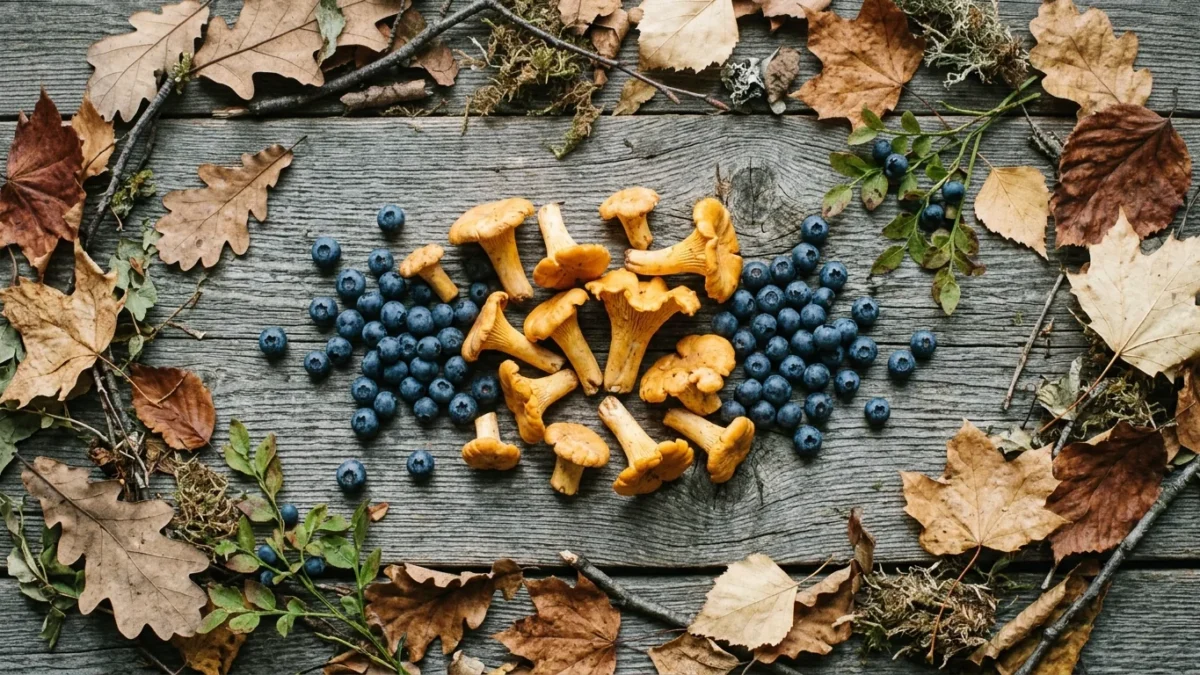
Maine’s forests yield some of the most nutrient-dense wild food in New England. Chanterelles push up through hardwood duff in late summer and hold on well into September. Hen-of-the-woods clusters appear at the bases of old oaks right as the leaves start to turn. Lowbush blueberries linger on the barrens into early fall, and bog cranberries ripen along the midcoast and Downeast just as the air gets sharp. Each of these foods has a nutritional story worth knowing before you head out.
Wild Mushrooms Worth Knowing
Chanterelles (Cantharellus cibarius) are among the richer natural sources of vitamin D and niacin (vitamin B3) you’ll find in the woods. Wild chanterelles exposed to sunlight can accumulate meaningful amounts of vitamin D2 (ergocalciferol), a form the body converts to active vitamin D, which is particularly relevant in Maine, where sun angle limits vitamin D production for much of the year. They also contain beta-glucans, polysaccharides associated with immune modulation in laboratory research. Niacin content runs around 4 mg per 100 grams fresh weight, roughly 25 percent of the daily adult reference value, according to nutrition data from Harvard T.H. Chan School of Public Health.
Hen-of-the-woods (Grifola frondosa), called maitake in Japan, has been studied more than most edible fungi. Its beta-glucan fraction has been the subject of small human trials and a number of animal studies examining effects on postprandial blood glucose. One pilot study in people with type 2 diabetes found that maitake extract reduced blood glucose after a meal by roughly 22 percent compared to control conditions. Larger, well-controlled trials are still limited, so the research is interesting rather than conclusive. What’s clear is that maitake’s polysaccharide content is real and measurable.
Black trumpets (Craterellus cornucopioides) are less famous but worth learning. They’re rich in iron and contain compounds that behave like B12 analogs in some analytical tests, though the bioavailability of those analogs in humans hasn’t been firmly established. They’re easy to dry and keep well, which makes them practical for a short Maine season.
One thing that matters more than any nutritional profile: proper identification. Several toxic species resemble edible mushrooms closely enough to cause serious harm. Jack-o’-lanterns look like chanterelles in dim light. False chanterelles are another common confusion. New foragers should learn from an experienced guide or take a course before eating anything wild. Maine Audubon and several local foraging groups offer fall walks specifically for this reason.
Late-Season Berries
Wild lowbush blueberries are Maine’s most studied native crop. Their anthocyanin content, the pigment compounds that give them their deep color, runs significantly higher than cultivated highbush varieties. Research at the University of Maine Cooperative Extension has documented the difference in antioxidant activity: wild lowbush blueberries scored an ORAC value of 87.8 micromol TE/g in USDA testing, compared to 50.0 for some highbush cultivars. The smaller berry size concentrates nutrients relative to surface area, which partly explains the gap.
Cranberries ripen in Maine bogs from mid-October onward. They’re high in proanthocyanidins, compounds studied primarily for their effects on urinary tract health and vascular function. The research on urinary tract benefits is fairly consistent across clinical trials, with proanthocyanidins appearing to reduce bacterial adherence to epithelial cells. Cranberries are tart enough raw that most people cook or juice them, but the nutritional value holds up through processing better than it does with many fruits. If you’re looking to build these foods into a broader dietary pattern, the guide to anti-inflammatory eating in northern New England covers how seasonal wild foods fit alongside everyday choices.
Practical Foraging Tips
Harvest only what you can identify with certainty. That standard is non-negotiable with wild mushrooms. Leave at least half of any wild patch undisturbed so the mycelium (for fungi) or root system (for berries) can recover. Maine has a strong right-to-forage tradition on unposted public land, but always confirm you’re not on private property before picking. State parks generally allow personal foraging for small quantities; rules vary by park, so check with Maine DACF before planning a full-day harvest. Fall brushland is also prime habitat for black-legged ticks, so reviewing tick season prevention and testing in New England before heading out is worth the few minutes it takes.
Bring a field guide specific to the Northeast, not a national guide. Species and look-alikes differ by region. David Arora’s Mushrooms Demystified is thorough, and the Audubon Society Field Guides cover New England berries well. A foraging walk with someone who knows the land is worth more than any book for a first season out.
Sources
- Harvard T.H. Chan School of Public Health, The Nutrition Source. “Mushrooms.” nutritionsource.hsph.harvard.edu/food-features/mushrooms/
- Deng G, et al. “A phase I/II trial of a polysaccharide extract from Grifola frondosa (Maitake mushroom) in breast cancer patients.” Journal of Cancer Research and Clinical Oncology. 2009;135(9):1215-1221. PubMed ID: 19253021.
- University of Maine Cooperative Extension. “Wild Blueberry Concentrations: Antioxidants, Vitamins and Minerals.” extension.umaine.edu/blueberries/resources/quality-food-safety/wild-blueberry-concentrations-antioxidants-vitamins-and-minerals/
- Jepson RG, et al. “Cranberries for preventing urinary tract infections.” Cochrane Database of Systematic Reviews. 2012. doi:10.1002/14651858.CD001321.pub5.
This article is for informational purposes only and does not constitute medical advice. Consult a qualified healthcare provider before making any health decisions.