Blue Light Glasses: What the Research Actually Shows
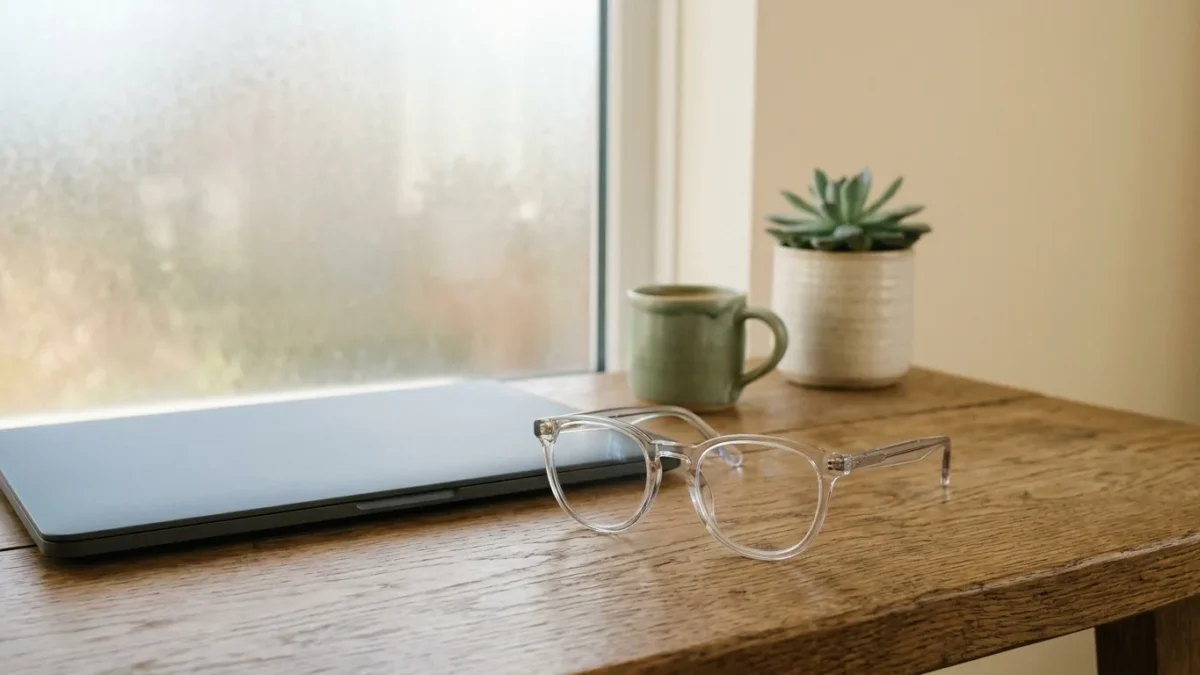
Blue light blocking glasses have become a common sight in offices across New Hampshire and Maine. The marketing promises are hard to ignore: better sleep, less eye strain, fewer headaches. The clinical evidence, though, is less decisive than the packaging suggests.
What Blue Light Actually Does
Blue light (wavelengths between 400 and 495 nm) comes from screens, LED lighting, and the sun. It plays a real role in circadian rhythm regulation. Evening blue light exposure can suppress melatonin production and delay sleep onset. Sleep researchers have known this for years, and it’s the basis for Night Shift and similar features built into most phones and computers.
So the concern is legitimate. The question is whether wearing a pair of tinted glasses fixes it.
What the Trials Show About Sleep
A 2023 Cochrane systematic review looked at 17 randomized controlled trials on blue light filtering lenses. The finding: no clinically significant difference in sleep quality, sleep latency, or melatonin levels compared to clear lenses. The reviewers concluded the evidence doesn’t support blue light glasses as a sleep intervention.
That doesn’t mean evening light exposure is irrelevant to sleep. It means the specific filtering these lenses provide may not be enough to produce a measurable effect. Software-based filters like Night Shift and f.lux may do more because they reduce total light intensity, not just blue wavelengths. Dimming a screen matters. A lightly tinted lens, apparently, does not.
The Eye Strain Question
Digital eye strain, also called computer vision syndrome, is caused by sustained close focus, a reduced blink rate, and dry indoor air. Blue light wavelengths aren’t the main driver. The American Academy of Ophthalmology doesn’t recommend blue light glasses for eye strain. Instead, they point to the 20-20-20 rule: every 20 minutes, look at something 20 feet away for 20 seconds. It’s free, and there’s actual evidence behind it.
If your eyes ache after a long day on a screen, the glasses on your nose probably aren’t the answer. Blinking more, stepping away from the monitor, and adjusting screen brightness will get you further.
So Are They Useless?
Not necessarily. Some people report feeling better while wearing them, and that’s worth something. Placebo effects are real and often underrated in symptom relief. If a $25 pair of glasses makes someone more comfortable during a long workday, there’s no harm in that.
What the research does say is that you shouldn’t pay a premium for them expecting improved sleep or clinically meaningful eye strain relief. The evidence for those claims isn’t there yet. This pattern of consumer products outpacing the clinical evidence shows up in wearable sleep trackers as well, where accuracy limitations often go unacknowledged on the packaging.
For sleep, the better bet is behavioral: dim your screens an hour before bed, use your phone’s built-in warm display setting, and get some natural light in the morning to reinforce your body’s day-night rhythm. None of that costs $80. For Maine residents dealing with long winters and limited daylight, adjusting sleep routines to the dark season covers additional strategies worth building into your routine.
Sources
- Singh S, et al. Blue-light filtering spectacle lenses for reducing visual fatigue. Cochrane Database of Systematic Reviews. 2023;8:CD013244.
- American Academy of Ophthalmology. Blue Light and Digital Eye Strain. Position Statement. 2024.
This article is for informational purposes only and does not constitute medical advice. Consult a qualified healthcare provider before making any health decisions.