What Causes Hot Flashes, and Why They Are Worse at Night
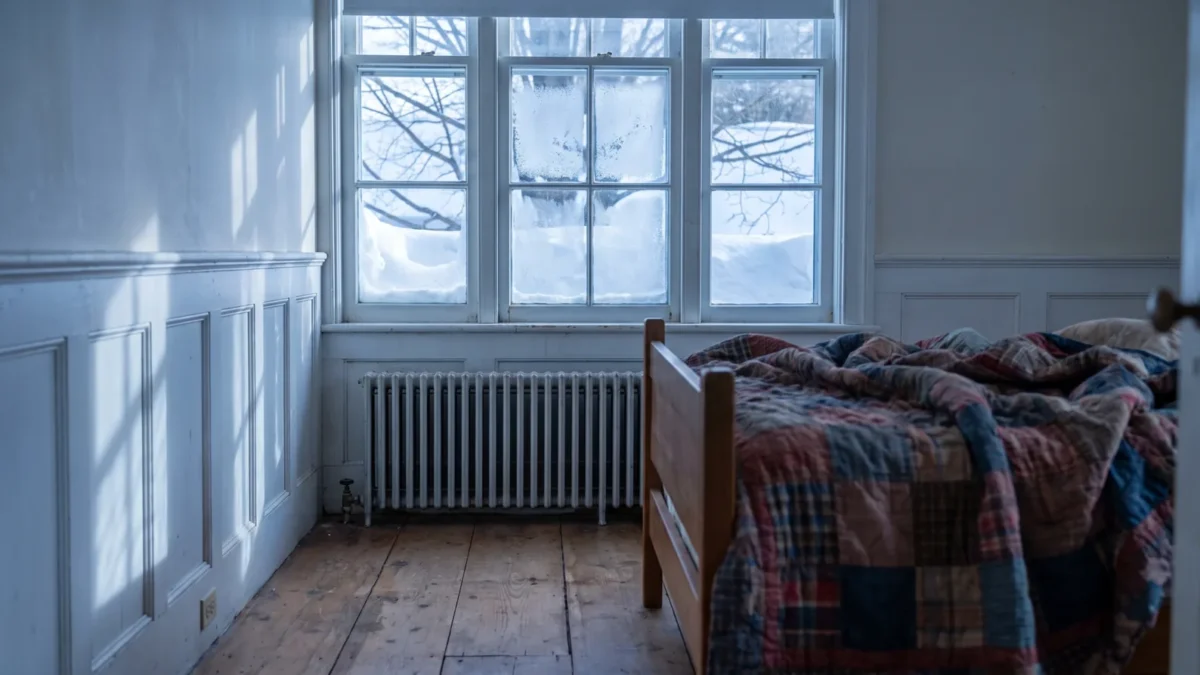
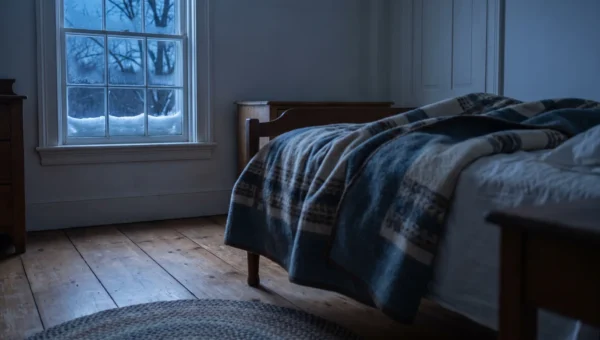
January in a northern New England house usually produces at least one thermostat argument. One person is cold, and the other has pushed the quilt onto the floor at two in the morning. What causes hot flashes is a heat dumping response that fires when the body has no real heat to shed. A small rise in core temperature is enough to set off sweating and a rush of blood to the skin, because in women who get flashes the thermoneutral zone, meaning the band of body temperature between sweating and shivering, has narrowed to almost nothing. One lab measured it at 0.0 degrees Celsius, against about 0.4 degrees in women without symptoms. Falling estrogen sets this up, but estrogen levels on their own don’t explain it, and researchers point instead to changes in a group of hypothalamic neurons known as KNDy neurons, along with raised sympathetic nervous system activity, as what squeezes the zone shut.
What causes hot flashes is a thermostat with no slack in it
Robert Freedman, whose lab produced a good deal of the underlying research, describes a hot flash as a rapid and exaggerated heat dissipation response. Heavy sweating. Blood vessels near the skin opening wide. A feeling of intense internal heat with nothing outside the body to account for it. The trigger is a small elevation in core temperature, and the reason so little can do so much is the zone that change lands in.
The body carries two thresholds. Cross the upper one and you sweat. Fall below the lower one and you shiver. Between them sits a band where neither happens, and that band is the thermoneutral zone. Normally it gives you room to move around, put on a sweater, sit near a woodstove. In women with hot flashes, that room is gone.
Freedman and Krell put numbers on it in 1999, studying 12 postmenopausal women who had hot flashes and 8 who did not. By rectal temperature, the symptomatic women had a zone of 0.0 degrees Celsius, plus or minus 0.06, against 0.4 degrees in the women without symptoms. Measured as mean body temperature, it was 0.8 degrees against 1.5. Then the researchers heated everyone up with exercise. Every one of the women with symptoms had a hot flash. None of the others did.
That is the mechanism in a single experiment. A normal thermoregulatory system absorbs a little extra heat without comment. A collapsed one fires the full emergency response, because from the brain’s point of view the sweating threshold has already been crossed.
Estrogen starts it. Estrogen doesn’t finish the explanation.
The obvious suspect is the one everybody names first, and it’s only half right. Estrogen withdrawal at menopause does travel with hot flashes. But Freedman’s 2001 review points out the awkward finding underneath: estrogen levels don’t differ between women who have flashes and women who don’t. Two women can sit at the same hormone level with completely different zones, one virtually nonexistent and one normal. Estrogen looks like a setup condition rather than the whole cause, which is part of why the wider perimenopause transition is harder to read off a single blood draw than most people expect.
Two other pieces are in play. Freedman identifies increased central sympathetic activation, working through alpha-2 adrenergic receptors, as one factor that narrows the zone. And a leading hypothesis from Naomi Rance and colleagues points at KNDy neurons in the hypothalamus, named for the kisspeptin, neurokinin B and dynorphin they carry. Those neurons change markedly after menopause. In the rat, they project into preoptic areas that handle temperature regulation and express the neurokinin 3 receptor, and destroying them reduces the skin vessel dilation that dumps heat while partly blocking estrogen’s effects on temperature control.
Hold that one loosely. Rance and colleagues frame it as a hypothesis, and much of the supporting work is in rats rather than people. It has produced something concrete, though. The FDA has approved fezolinetant, sold as Veozah, for moderate to severe hot flashes caused by menopause, and the National Institute on Aging describes it as a neurokinin 3 receptor antagonist that works in the part of the brain regulating body temperature.
None of which adds up to a settled account. Federal patient guidance from the Office on Women’s Health says plainly that providers and researchers do not know why hot flashes are so common during menopause. A strange sentence to find on a government health page, and an honest one.
Why the night version behaves differently
Flashes are not spread evenly across the day. Freedman’s group tracked them against core body temperature and found a circadian rhythm peaking around 18:25, which is dinner time rather than the middle of the night. Most flashes were preceded by a rise in core temperature. Between midnight and four in the morning, core temperature in the symptomatic women actually ran lower than in the women without symptoms.
What makes the night memorable is the interruption, not the count. In a four night sleep laboratory study, Freedman and Roehrs found that during the first half of the night, women with hot flashes had significantly more arousals and awakenings than the comparison groups, and most flashes came just before those awakenings. In the second half of the night the sequence reversed. The authors concluded that REM sleep, which takes up more of the back half of the night, suppresses flashes and the arousals that go with them.
The sleep cost has been measured in an unusual way. Hadine Joffe’s team induced a menopause-like drop in estradiol in 29 healthy women using a GnRH agonist, then ran polysomnography. Each additional nighttime vasomotor symptom a woman reported was associated with a 62 percent increase from baseline in time spent awake after falling asleep, a 3 percent increase in awakenings, and a 6 percent increase in the lightest stage of sleep. Sixty-nine percent developed persistent symptoms. These were young volunteers in a model of menopause rather than women going through it naturally, and that design is what makes the numbers useful: the disruption tracked the flashes, not age.
Freedman adds a caution worth repeating. Flashes account for some, but not all, of the sleep disturbance reported during menopause. If the nights are wrecked and the flashes are mild or absent, something else is going on, and sleep problems in menopause deserve looking at on their own terms.
The longest heating season in the lower 48
One environmental variable has laboratory evidence behind it, and northern New England may be the worst place in the country to have it working against you.
In that same four night study, Freedman and Roehrs ran the bedrooms at three ambient temperatures in randomized order: 30, 23 and 18 degrees Celsius, or roughly 86, 73 and 64 degrees Fahrenheit. During the first half of the night, the 18 degree room significantly reduced the number of flashes, from 2.2 down to 1.5. The effect did not carry into the second half, which lines up with the REM finding above.
Now set that against a Maine winter. NOAA’s statewide records put Maine’s December to February average temperature for the 2025 to 2026 winter at 16.3 degrees Fahrenheit, with New Hampshire at 18.6. Over calendar year 2025, Maine ran up 7,645 heating degree days and New Hampshire 7,375, against 4,064 for the contiguous United States, roughly 88 percent more heating demand than the country as a whole. About half of Maine households still heat primarily with fuel oil, and the state Department of Energy Resources notes that Maine consumes more residential heating oil per capita than any other state.
The practical result is a house running continuous heat for five or six months, with bedrooms sitting a long way above the one condition a laboratory has shown to change nocturnal flash counts. Not a small audience, either. Census estimates for 2024 put roughly 187,929 Maine women and 189,736 New Hampshire women in the 45 to 64 age band, about 378,000 people in the two states.
What the guidelines say about cooling, read carefully
This is where a lot of wellness writing gets it wrong.
The Menopause Society’s 2023 position statement on nonhormone therapy does not recommend cooling techniques for vasomotor symptoms. It rates that evidence at Level II, meaning limited or inconsistent scientific evidence. Avoiding triggers gets the same rating and the same verdict, and paced respiration, long a staple of menopause advice, does not make the recommended list either.
Read what that is doing. The statement is grading clinical trial evidence for cooling as a treatment. It is not telling anyone to keep the bedroom warm, and it does not contradict the physiology above. A single 24 woman laboratory study showing a first-half-of-the-night reduction can be a real finding and thin trial evidence at the same time. The National Institute on Aging, writing for patients rather than grading trials, still lists lowering the temperature in the bedroom among the things people try. It names no number.
What the 2023 statement does recommend at its highest evidence level is cognitive behavioral therapy, clinical hypnosis, several prescription options including SSRIs, SNRIs and gabapentin, and fezolinetant. It also states that hormone therapy remains the most effective treatment for vasomotor symptoms. Which of those belongs in a given person’s life, if any, is a conversation with a clinician who knows that person’s history.
How long this actually goes on
The average age at menopause is 51, according to the American College of Obstetricians and Gynecologists, and a single flash can run from a few seconds to several minutes or longer. Frequency varies enormously, from a few times a month for some women to several times a day for others. Night sweats, ACOG notes, may wake you up and leave you tired and sluggish the next day.
Duration is where expectations tend to be furthest off. The Study of Women’s Health Across the Nation followed 3,302 women at seven US sites and found a median total duration of frequent vasomotor symptoms of 7.4 years. Among the 881 women whose final menstrual period could be pinned down, symptoms persisted a median of 4.5 years past it. Women who were premenopausal or early perimenopausal when frequent symptoms first appeared had the longest run, a median above 11.8 years. Federal guidance puts the outer edge at up to 14 years after menopause, and notes that as many as three out of four women experience hot flashes at all.
The early-onset finding is the one worth sitting with, because it means women whose flashes begin while their cycles are still reasonably regular are facing the longest course. If cycle changes are already underway, that pattern is laid out in our piece on irregular periods during perimenopause.
What the research offers today is a solid mechanism, an incomplete cause, and a clear statement that this is a physiological event rather than an oversensitivity to a warm room. The zone narrowed. The body then answered a temperature change that would have meant nothing a few years earlier. Anyone whose sleep is being taken apart by it has a real problem to bring to a clinician, with decades of laboratory work behind them.
Sources
- Freedman RR. Menopausal hot flashes: mechanisms, endocrinology, treatment. Journal of Steroid Biochemistry and Molecular Biology, 2014. https://pubmed.ncbi.nlm.nih.gov/24012626/
- Freedman RR, Krell W. Reduced thermoregulatory null zone in postmenopausal women with hot flashes. American Journal of Obstetrics and Gynecology, 1999. https://pubmed.ncbi.nlm.nih.gov/10411797/
- Freedman RR. Physiology of hot flashes. American Journal of Human Biology, 2001. https://pubmed.ncbi.nlm.nih.gov/11400216/
- Rance NE, Dacks PA, Mittelman-Smith MA, Romanovsky AA, Krajewski-Hall SJ. Modulation of body temperature and LH secretion by hypothalamic KNDy neurons: a novel hypothesis on the mechanism of hot flushes. Frontiers in Neuroendocrinology, 2013. https://pubmed.ncbi.nlm.nih.gov/23872331/
- Freedman RR, Norton D, Woodward S, Cornelissen G. Core body temperature and circadian rhythm of hot flashes in menopausal women. Journal of Clinical Endocrinology and Metabolism, 1995. https://pubmed.ncbi.nlm.nih.gov/7629229/
- Freedman RR, Roehrs TA. Effects of REM sleep and ambient temperature on hot flash-induced sleep disturbance. Menopause, 2006. https://pubmed.ncbi.nlm.nih.gov/16837879/
- Joffe H, Crawford S, Economou N, Kim S, Regan S, Hall JE, White D. A gonadotropin-releasing hormone agonist model demonstrates that nocturnal hot flashes interrupt objective sleep. Sleep, 2013. https://pubmed.ncbi.nlm.nih.gov/24293774/
- Avis NE, Crawford SL, Greendale G, et al. Duration of menopausal vasomotor symptoms over the menopause transition. JAMA Internal Medicine, 2015. https://pubmed.ncbi.nlm.nih.gov/25686030/
- The 2023 nonhormone therapy position statement of The North American Menopause Society. Menopause, 2023. https://pubmed.ncbi.nlm.nih.gov/37252752/
- National Institute on Aging. Hot Flashes: What Can I Do? https://www.nia.nih.gov/health/menopause/hot-flashes-what-can-i-do
- Office on Women’s Health, US Department of Health and Human Services. Menopause symptoms and relief. https://www.womenshealth.gov/menopause/menopause-symptoms-and-relief
- American College of Obstetricians and Gynecologists. The Menopause Years. https://www.acog.org/womens-health/faqs/the-menopause-years
- Maine Department of Energy Resources. Maine Energy Profile. https://www.maine.gov/energy/about/energy-profile
- NOAA National Centers for Environmental Information. Climate at a Glance, statewide time series, December to February average temperature. https://www.ncei.noaa.gov/access/monitoring/climate-at-a-glance/statewide/time-series/17/tavg/3/2/1895-2026
- NOAA National Centers for Environmental Information. Climate at a Glance, January to December heating degree days. https://www.ncei.noaa.gov/access/monitoring/climate-at-a-glance/statewide/time-series/17/hdd/12/12/1895-2025
- US Census Bureau, Population Estimates Program. State Characteristics: civilian population by single year of age and sex, vintage 2024. https://www.census.gov/data/tables/time-series/demo/popest/2020s-state-detail.html
This article is for informational purposes only and does not constitute medical advice. Consult a qualified healthcare provider before making any health decisions.