Summer Hydration in Maine: More Than Just Drinking Water
Maine summers are deceptively demanding on the body. Coastal humidity, full-day hikes in Baxter State Park, and afternoon kayak trips on Casco Bay can all push fluid and electrolyte losses further than most people expect. Drinking more water helps. But it’s often not enough on its own.
Why Water Alone Falls Short
Sweat isn’t just water. It carries sodium, potassium, magnesium, and chloride, and during sustained physical activity in heat, sweat sodium losses can range from 500 to 1,000 mg per liter, according to the American College of Sports Medicine. When you replace that lost fluid with plain water and nothing else, blood sodium concentration drops. The result: fatigue, headaches, and in serious cases, hyponatremia, a condition where low sodium levels cause confusion and, if untreated, something far worse.
That’s worth paying attention to on a day hike up Katahdin. The summit is nearly a mile above sea level, the exposure is real, and the trail is long. In hot conditions, dehydration and heat illness can compound quickly. Same goes for a full paddle day on Sebago Lake. You’re sweating more than it feels like you are.
What Practical Hydration Actually Looks Like
Start hydrating the day before any extended outdoor activity. Waiting until you’re thirsty on the trail puts you a step behind. The simplest urine color check still works: pale yellow means you’re doing fine. Dark amber means catch up.
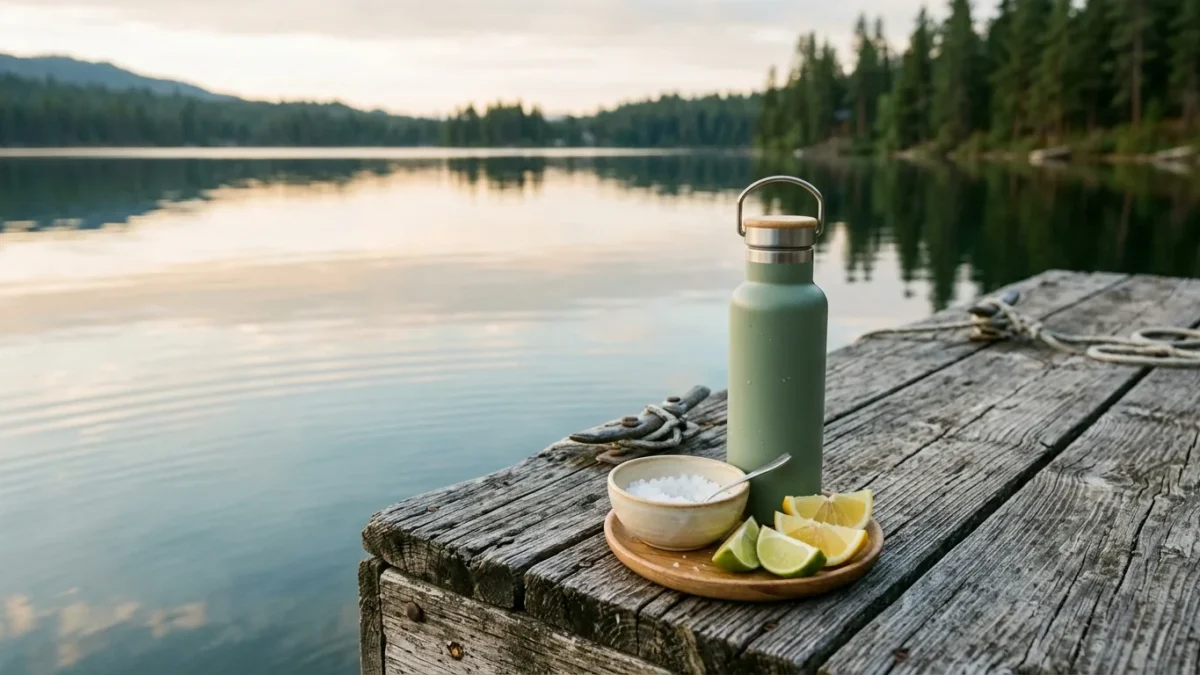
For activity lasting more than 60 minutes, add an electrolyte source. Commercial electrolyte powders are convenient, but a simple option works just as well: water with a small pinch of salt and a squeeze of lemon or lime. After you’re done, pair your water with a sodium-containing snack or meal. The body holds onto fluid better when sodium is present, so rehydration after a long paddle or hike is faster with food than without it. A good insulated bottle that keeps water cold also makes it easier to keep drinking on a hot day.
Signs of Dehydration Worth Knowing
Thirst is a late signal. By the time you feel it, you’re already behind. Earlier signs include dark urine, a mild headache that seems to come from nowhere, and a fatigue that feels out of proportion to what you’ve actually done. Difficulty concentrating is another one people often miss.
In older adults, the thirst signal becomes less reliable with age. Proactive hydration habits matter more, not less, as the years go on. The National Athletic Trainers’ Association recommends establishing a fluid intake plan before exercise rather than relying on thirst as a guide, particularly in warm or humid conditions.
Sources
- American College of Sports Medicine. Exercise and Fluid Replacement Position Stand.
- National Athletic Trainers’ Association. Fluid Replacement for the Physically Active.
This article is for informational purposes only and does not constitute medical advice. Consult a qualified healthcare provider before making any health decisions.