Vitamin D and Bone Health Past 50

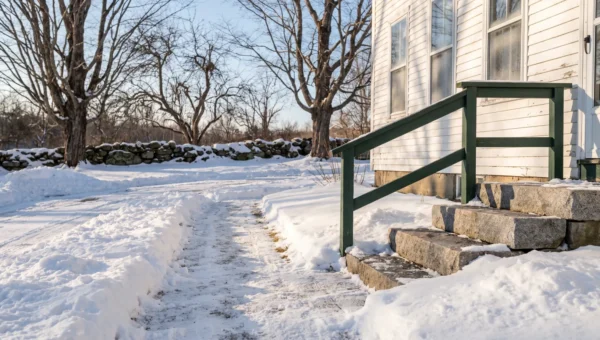
Drive past any Maine dooryard in January and you will see the quiet math of a northern winter: sand buckets by the steps, ice cleats hanging on a nail, a railing somebody added after a close call. Falls are not an abstraction up here. They are a season. And for a lot of older Mainers, the worry about falling leads straight to a question about a little gold capsule on the counter. Does vitamin D actually keep your bones from breaking?
Why bone is a winter conversation in the oldest state
Maine carries this question harder than most places. It is the oldest state in the nation by median age, 44.8 in 2024, and roughly 23 percent of residents are 65 or older, according to the U.S. Census Bureau and the Maine Office of the State Economist. When a large share of your neighbors are at the age where bones thin and balance shifts, a slip on black ice stops being a minor mishap.
The numbers back up the instinct. The CDC reports that about 1 in 4 adults 65 and older falls each year, and nearly 319,000 older people are hospitalized for hip fractures annually. Winter sharpens the edge. A CDC analysis of 2015 data found roughly 26 percent of fall-related emergency visits happened in winter, a pattern driven largely by outdoor falls on snow, ice, and freezing rain. A hip fracture at 80 is a life-changing event, and that fear drives much of the vitamin D talk in northern New England.
What vitamin D actually does for bone
Start with the part nobody disputes. Your body cannot absorb calcium without enough vitamin D. The NIH Office of Dietary Supplements puts it plainly: vitamin D is what lets the gut pull calcium out of food and into the bloodstream, where it can reach your skeleton. Run short on both for years and bones grow fragile and more prone to breaking.
So the biology is real. Vitamin D and calcium together are part of how the body defends against osteoporosis, the gradual loss of bone density that makes a fall so dangerous. The trouble starts when people assume that because the nutrient matters, a daily supplement must lower their odds of a fracture. That leap is where the research gets interesting, and a lot less tidy than the supplement aisle suggests.
What the big trials found in healthy older adults
The largest American test of this idea is the VITAL trial. Researchers followed 25,871 generally healthy adults, half taking 2,000 IU of vitamin D3 a day and half taking a placebo, for a median of about five years. The fracture results, published in the New England Journal of Medicine in 2022, were blunt. Vitamin D did not reduce fractures. Total fractures were essentially identical between the two groups.
A separate piece of VITAL looked at bone itself rather than breaks. In that bone-health substudy, published in 2020, two years of vitamin D versus placebo did not improve bone density or structure in adults who were not short on vitamin D to begin with. The spine readings barely moved, and the difference was not statistically meaningful.
VITAL was not alone. A 2017 JAMA review pooled 33 trials and more than 51,000 community-dwelling older adults. It found that calcium, vitamin D, or both taken together were not linked to fewer fractures. The authors went so far as to say the evidence did not support routine use of these supplements for people living independently in the general community.
Then, in December 2024, the U.S. Preventive Services Task Force put its weight behind the same conclusion. In a draft recommendation, it advised against vitamin D, with or without calcium, for preventing falls and fractures in most community-dwelling adults, postmenopausal women and men 60 and up. The panel pooled seven trials covering more than 88,000 people and found no meaningful drop in hip fractures. For a body as cautious as the USPSTF, that is a strong signal.
The nuance: who actually benefits
Here is where the story turns, and where blanket headlines do real harm. The trials above studied people who, for the most part, already had enough vitamin D and reasonably sound bones. That is not everyone.
Go back to 1992 and a French study still cited today. Researchers followed 3,270 women with an average age of 84, many living in nursing homes, and gave them vitamin D plus calcium daily. Over 18 months, the supplemented group had 43 percent fewer hip fractures and 32 percent fewer nonvertebral fractures than the placebo group. That is a dramatic result, and it points at the real lesson. The women who benefited were frail, older, and often deficient. The people in VITAL were not.
So the question is not “does vitamin D work?” It is “who is actually running low?” A housebound 85-year-old in Aroostook County who rarely gets outside is a very different case from an active 58-year-old who summers on a lake and takes a daily walk. If you are not sure which group you fall into, that is a conversation for your provider, and possibly a simple blood test. We cover what those numbers from a vitamin D test actually mean in a separate piece.
What the recommended intakes are, and why food comes first
Federal guidance does set targets, and they rise with age. The NIH and Institute of Medicine put the recommended daily vitamin D intake at 600 IU for most adults and 800 IU for adults 71 and older, amounts meant to support a blood level of at least 20 ng/mL. The Bone Health and Osteoporosis Foundation suggests 800 to 1,000 IU of vitamin D daily for adults over 50, paired with 1,200 mg of calcium for women over 50 and men over 70.
Notice what that last group stresses, though. Food first. The foundation is clear that food is the best source of calcium and that supplements should only fill the gap that meals leave behind. None of this is a prescription, and the right amount for any one person depends on diet, blood levels, and medical history. The honest takeaway is simpler than a label promise: meeting the recommended intake is reasonable, megadosing in hopes of bonus protection is not supported.
Maine actually has a head start on the food side. Wild Atlantic salmon, canned sardines, a couple of eggs, fortified milk. These are dinner-table foods here, not exotic health-store finds. For most of the year the bigger problem is the sun, because at our latitude the skin makes almost no vitamin D for months at a stretch. That seasonal gap is its own subject, and it is the spine of our broader guide to vitamin D in northern New England.
Beyond the pill bottle: protecting aging bone
If a daily capsule is not the fracture shield many hoped for, what is? The research points somewhere that is harder to bottle and sell: movement.
The same USPSTF that warned against routine vitamin D for fall prevention recommends exercise for older adults at higher risk of falling. Strength, balance, and steadiness on your feet have better evidence behind them than any supplement does for keeping you upright through an icy March. That is not a knock on nutrition. It is a reminder of where the strongest protection actually sits.
Practical, weather-aware steps carry real weight in a place like this. A few worth keeping in mind:
- Balance and strength work you will actually stick with through the winter, whether that is a class, snowshoeing, or just steady walking when the footing allows.
- Calcium-rich food on the plate before a calcium pill in the cabinet.
- Ice cleats and a well-sanded path. Boring, and probably more protective than anything in the supplement aisle.
- A blood test if you have reason to think you run low, rather than guessing.
Vitamin D matters for bone. That much is settled. What the past decade of trials added is a sense of proportion: for a healthy, well-nourished older adult, a supplement is unlikely to be the thing that prevents a broken hip. For someone genuinely deficient or frail, it may help a great deal. Knowing which person you are, and staying on your feet, is the work that actually moves the needle through a Maine winter.
Sources
- U.S. Census Bureau. Older Adults Outnumber Children in 11 States and Nearly Half of U.S. Counties. 2025. https://www.census.gov/newsroom/press-releases/2025/older-adults-outnumber-children.html
- Maine Office of the State Economist (DAFS). Ageism Awareness Day 2024: Shifting Demographics and Contributions of Older Adults. 2024. https://www.maine.gov/dafs/economist/news/oct-09-24/ageism-awareness-day-2024-shifting-demographics-contributions-older-adults
- U.S. Centers for Disease Control and Prevention. Facts About Falls. 2024. https://www.cdc.gov/falls/data-research/facts-stats/index.html
- Journal of Safety Research (CDC authors), via PubMed. Seasonal variation in fall-related emergency department visits by location of fall, United States, 2015. 2021. https://pubmed.ncbi.nlm.nih.gov/34848018/
- NIH Office of Dietary Supplements. Vitamin D: Fact Sheet for Health Professionals. 2024. https://ods.od.nih.gov/factsheets/VitaminD-HealthProfessional/
- New England Journal of Medicine. Supplemental Vitamin D and Incident Fractures in Midlife and Older Adults (VITAL). 2022. https://www.nejm.org/doi/full/10.1056/NEJMoa2202106
- Journal of Bone and Mineral Research (PMC). Effects of Supplemental Vitamin D on Bone Health Outcomes in Women and Men in VITAL. 2020. https://pmc.ncbi.nlm.nih.gov/articles/PMC7217747/
- JAMA. Association Between Calcium or Vitamin D Supplementation and Fracture Incidence in Community-Dwelling Older Adults. 2017. https://jamanetwork.com/journals/jama/fullarticle/2667071
- U.S. Preventive Services Task Force. Draft Recommendation: Vitamin D, Calcium, or Combined Supplementation for the Primary Prevention of Falls and Fractures in Community-Dwelling Adults. 2024. https://www.uspreventiveservicestaskforce.org/uspstf/draft-recommendation/vitamin-d-calcium-combined-supplementation-primary-prevention-falls-fractures-communitydwelling-adults
- New England Journal of Medicine. Vitamin D3 and Calcium to Prevent Hip Fractures in Elderly Women (Chapuy 1992). 1992. https://www.nejm.org/doi/full/10.1056/NEJM199212033272305
- Institute of Medicine (PMC). The 2011 Report on Dietary Reference Intakes for Calcium and Vitamin D. 2011. https://pmc.ncbi.nlm.nih.gov/articles/PMC3046611/
- Bone Health and Osteoporosis Foundation. Calcium/Vitamin D Requirements, Recommended Foods and Supplements. 2024. https://www.bonehealthandosteoporosis.org/patients/treatment/calciumvitamin-d/
This article is for informational purposes only and does not constitute medical advice. Consult a qualified healthcare provider before making any health decisions.